A photo safari in Tanzania is an opportunity to photograph some of Africa’s most remarkable wildlife and landscapes, from lions resting in the Serengeti grasslands to elephants moving between baobab trees in Tarangire. Yet a successful photography trip involves more than choosing a famous national park and bringing a camera.
The destination, season, time of day, vehicle, guide, and amount of time available at wildlife sightings can all influence your photographs. Understanding these factors before travelling can help you make better decisions and spend more of your safari focused on photography.
This guide explains where to go for a photo safari in Tanzania, when to visit, what camera equipment to bring, how to improve your wildlife photographs, and how to plan a trip around your photographic goals.
What Is a Photo Safari in Tanzania?
A photo safari is a wildlife journey planned with photography as a central priority. Rather than focusing exclusively on seeing as many animals as possible, photographers may spend more time waiting for the right light, observing animal behaviour, choosing a composition, or photographing a particular species.
Tanzania is well suited to this style of travel because its landscapes vary considerably between open grasslands, woodland, wetlands, volcanic highlands, and river systems.
A photo safari can suit several types of travellers:
- Wildlife enthusiasts who want better photographs of African animals.
- Amateur photographers looking to improve their skills in the field.
- Experienced photographers planning a portfolio or wildlife photography project.
- Couples or families who enjoy photography alongside a traditional safari.
- Nature photographers interested in landscapes, birds, and animal behaviour.
You do not need professional equipment to enjoy a photo safari. A smartphone or entry-level camera can produce memorable images, although a camera with a suitable telephoto lens provides greater flexibility when photographing distant wildlife.
Best Places for a Photo Safari in Tanzania
The best park depends on the images you want to create. Some destinations are particularly attractive for wide landscapes and large herds, while others offer woodland scenes, dramatic terrain, or opportunities to photograph specific animal behaviours.
1. Serengeti National Park: Classic African Wildlife Photography
The Serengeti is one of Tanzania’s leading destinations for wildlife photography. Its expansive plains, scattered rocky outcrops, and diverse wildlife create opportunities for both close-up animal portraits and photographs that place animals within their environment.
Photographic subjects include lions, cheetahs, leopards, elephants, giraffes, zebras, and wildebeest. The exact sightings depend on location, season, and animal movements.
Best photographic opportunities:
- Wide compositions featuring wildlife against open plains.
- Predator portraits and animal behaviour when sightings allow.
- Herds of wildebeest and zebra during the Great Migration.
- Landscapes with dramatic skies, especially around sunrise and sunset.
- Wildlife resting on or moving around rocky outcrops known as kopjes.
The Serengeti is extensive, so location matters. Central Serengeti, the southern plains, and the northern migration areas offer different photographic possibilities at different times of year.
Before booking, read our Serengeti National Park Safari Guide and Great Migration in Tanzania Guide.
Photography tip: Do not assume a long lens is always the best choice. A wider composition can tell a more compelling story by showing an animal within its habitat.
2. Ngorongoro Crater: Wildlife and Dramatic Landscapes
The Ngorongoro Conservation Area offers a different photographic experience. Its crater scenery, grasslands, wetlands, and varied habitats create opportunities to combine wildlife portraits with landscape photography.
The crater floor can provide rewarding wildlife viewing, including opportunities to photograph buffalo, elephants, zebras, lions, and, with luck, black rhinos.
However, photographers must plan around the area’s access rules. Off-road driving is prohibited in the crater, so the ability to reposition a vehicle for a photograph is limited. A telephoto lens is particularly useful in these conditions.
Best photographic opportunities:
- Wildlife framed against the crater’s wider landscape.
- Animals on open grassland.
- Birds and wetland scenes around suitable habitats.
- Environmental portraits that show animals in context.
Photography tip: Use a longer lens when you cannot approach a subject, but also take landscape photographs that communicate the scale and atmosphere of the crater.
For more details, see our Ngorongoro Crater Safari Guide.
3. Tarangire National Park: Elephants and Baobab Landscapes
Tarangire is especially appealing to photographers who want to combine wildlife with distinctive scenery. Its baobab trees, open woodland, river landscapes, and elephant herds provide visual variety.
During the dry season, wildlife may concentrate around available water sources, although sightings and animal movements vary.
Best photographic opportunities:
- Elephant herds moving through the landscape.
- Baobab trees used as strong compositional elements.
- Wildlife silhouettes and backlit scenes near sunset.
- Dusty scenes that convey movement and atmosphere.
- Birds and other wildlife around suitable water sources.
Photography tip: Include the surrounding landscape when photographing elephants beneath baobabs. This can create a stronger sense of scale than a tightly framed animal portrait alone.
Explore our Tarangire National Park Safari Guide.
4. Lake Manyara National Park: Forest, Water and Birdlife
Lake Manyara offers a mixture of woodland, groundwater forest, open areas, and lakeside habitats. This variety can suit photographers who want more than large mammals on open plains.
Depending on the season and conditions, subjects may include elephants, baboons, other mammals, waterbirds, and landscapes shaped by the lake and surrounding escarpment.
Best photographic opportunities:
- Wildlife photographed in forest or woodland settings.
- Birds around suitable wetland habitats.
- Reflections and atmospheric landscapes when conditions permit.
- Details of animal behaviour rather than only full-body portraits.
Forest photography can be more challenging because vegetation creates distracting backgrounds and light levels change quickly.
Photography tip: Look for a clear separation between the subject and background. Waiting for an animal to move into an opening can produce a cleaner photograph than shooting immediately.
Read our Lake Manyara National Park Guide.
5. Nyerere National Park: Rivers and Southern Tanzania Landscapes
Nyerere National Park is worth considering for photographers seeking a different setting from the classic northern circuit. The Rufiji River system, woodland, floodplains, and varied habitats can offer distinctive wildlife and landscape photographs.
Depending on the itinerary and permitted activities, the wider area may provide opportunities for boat-based wildlife viewing as well as conventional game drives.
Best photographic opportunities:
- River and wetland landscapes.
- Elephants and other wildlife near water.
- Reflections and layered scenery.
- Wildlife photographed against woodland or open floodplains.
Boat-based photography requires particular care with camera stability, changing light, and the position of the sun. Confirm which activities are included in the itinerary and whether they are suitable for your photographic goals.
See our Nyerere National Park (Selous) Safari Guide.
Plan Your Tanzania Photo Safari
Looking for the right safari for your photography goals? Let’s help you plan your trip.
When Is the Best Time for a Photo Safari in Tanzania?
There is no single best month for every type of wildlife photography. The right time depends on your preferred subjects, the landscapes you want to photograph, and the areas you plan to visit.
June to October: The Dry Season
The dry season is popular for wildlife viewing in many Tanzanian parks. In some areas, shorter grass and wildlife concentrating near water can make animals easier to spot.
Potential advantages include:
- Better visibility in some open habitats.
- Opportunities to photograph wildlife around water sources.
- Dry-season landscapes and atmospheric dust.
- Conditions that may suit classic wildlife portraits.
The trade-offs include busier locations at popular sightings, dusty conditions, and landscapes that can appear dry or muted.
In the Serengeti, the timing and location of the Great Migration change through the year. River crossings are unpredictable, and no operator can guarantee that a crossing will occur during a particular game drive.
January to March: Green Landscapes and Calving Opportunities
The southern Serengeti and Ndutu area can offer opportunities to photograph wildebeest calving, depending on rainfall and the movement of the herds.
This period can be attractive for photographers who want:
- Green or recently refreshed landscapes.
- Young animals and herd behaviour.
- Dramatic cloud formations.
- Birdlife and seasonal changes in the environment.
Wildlife encounters are never guaranteed, and conditions vary from year to year. Plan around current migration information rather than relying solely on a fixed calendar.
November to December: Changing Skies and Fresh Landscapes
The short rains can refresh the scenery and create interesting light. Photographers may encounter dramatic clouds, greener vegetation, and opportunities for environmental images.
Rainfall is variable, and showers can affect road conditions and visibility. A flexible itinerary and protection for camera equipment are useful.
March to May: Rain, Atmosphere and Fewer Visitors in Some Areas
The long-rain period can produce rich colours, moody skies, and atmospheric landscape photography. However, heavy rain may affect tracks, travel times, and the availability of some accommodation.
This season can suit photographers who value landscape and atmosphere as much as close-up wildlife images, provided they accept the logistical uncertainties.
The key principle: Choose your travel dates according to the photographs you hope to make, not just a general claim that one month is best for every safari.
For broader seasonal planning, read our Best Time to Visit Tanzania Guide and Serengeti Low Season Guide.
Essential Camera Equipment for a Tanzania Photo Safari
You can take memorable wildlife photographs without carrying a professional studio’s worth of equipment. A reliable, manageable kit is usually more useful than equipment you cannot operate comfortably in the field.
Camera Body
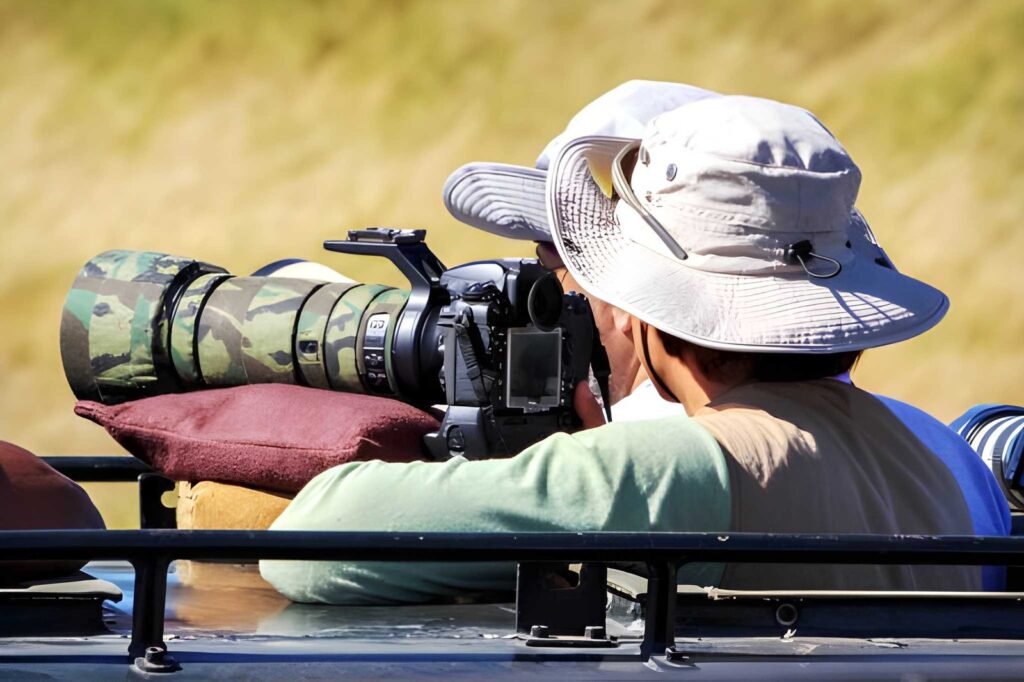
A DSLR or mirrorless camera with reliable autofocus can be helpful for moving wildlife. A camera with good high-ISO performance is useful when photographing animals in shade or during early morning and late afternoon drives.
If you are using a smartphone, prioritise good light, stable framing, and the optical zoom available on your device. Avoid excessive digital zoom when image quality matters.
Telephoto Lens
A telephoto lens helps photograph animals that must be observed from a respectful distance.
A lens in the approximate 100–400 mm or 150–600 mm range can be versatile for wildlife photography, depending on your camera system and the subjects you expect to photograph. These are examples rather than mandatory specifications.
A longer lens is particularly useful for distant subjects and close-up portraits. A shorter telephoto or standard zoom can be better for larger animals, groups, and scenes where the environment matters.
Wide-Angle or Standard Zoom Lens
A wide-angle or standard zoom helps capture:
- Wildlife within a broad landscape.
- Sunrise and sunset scenery.
- Large herds and groups of animals.
- Camp surroundings and travel details.
Changing lenses in a dusty vehicle can expose your camera sensor to dust. If you carry more than one lens, plan changes carefully and keep equipment protected.
Other Useful Accessories
Consider packing:
- Spare batteries and a dependable charging solution.
- Multiple memory cards with enough capacity for your trip.
- A secure camera bag or padded insert.
- A lens cloth and appropriate cleaning tools.
- A beanbag or another stable support for use in a safari vehicle, with the operator’s permission.
- A rain cover or dry bag.
- A laptop or storage device for backing up images.
- Binoculars, which can help you identify distant wildlife before choosing a composition.
Bring equipment you already know how to use. A safari is not the ideal time to learn an unfamiliar camera system from scratch.
Wildlife Photography Tips for Better Safari Images
1. Photograph During the Best Available Light
Early morning and late afternoon often provide softer, warmer light than the middle of the day. These periods can also coincide with useful wildlife activity, although animals behave unpredictably.
When the sun is high, look for subjects in open shade, interesting patterns, or compositions that work with the stronger light.
Do not discard every midday photograph. Strong sunlight can still produce effective images when the subject, angle, and composition are right.
2. Use a Fast Shutter Speed for Moving Animals
A fast shutter speed helps freeze movement when photographing running animals, birds in flight, or sudden changes in behaviour.
The appropriate speed depends on how quickly the subject moves, the focal length, and how much movement you want to preserve. Start with a faster shutter speed for action, then adjust according to the conditions.
For stationary subjects, you may be able to use a slower shutter speed, especially when your camera is supported. Check the image afterwards to ensure that the animal’s eyes and important details are sharp.
3. Keep the Animal’s Eyes in Focus
For animal portraits, the eyes are often the most important point of focus. Use an appropriate autofocus mode for your camera and check that focus is on the eye rather than the nose, nearby grass, or background.
If the animal is moving, continuous autofocus and burst shooting may improve your chances of capturing a sharp moment.
4. Think About the Background
A technically sharp photograph can still be weak if the background is distracting.
Look for a clean background, a separation between the animal and nearby vegetation, or a natural framing element. If the scene allows, ask your guide whether a small, permitted change in vehicle position could improve the angle.
Do not pressure a guide to break park rules or disturb wildlife for a better photograph.
5. Tell a Story, Not Just a Portrait
Close-up photographs are valuable, but behaviour often makes a more compelling wildlife image.
Watch for interactions between adults and young, grooming, feeding, alert postures, movement through the landscape, and relationships between animals.
Patience is essential. Observe what is happening before deciding which moment to photograph.
6. Make Both Horizontal and Vertical Compositions
Horizontal images often work well for landscapes and groups. Vertical images can suit standing animals, giraffes, or a subject framed against a tall tree.
If the encounter gives you enough time, make a few different compositions instead of taking many nearly identical photographs.
7. Protect Your Equipment from Dust and Rain
Dust is common on safari roads, while rain and humidity can create different challenges. Keep unused equipment inside a closed bag, minimise lens changes outdoors, and clean your equipment carefully with suitable tools.
If your vehicle is moving, secure your camera and lens rather than leaving them loose on a seat or exposed surface.
8. Back Up Your Photographs Every Day
Memory cards can fail, and equipment can be lost or damaged. If possible, keep a second copy of your photographs on a separate storage device.
A simple routine is to copy images each evening, verify that the backup is readable, and avoid formatting a card until you are confident the files have been safely copied.
Why the Safari Vehicle and Guide Matter
For a photography-focused safari, the vehicle and guide can influence your experience almost as much as the destination.
A private vehicle may provide greater flexibility over the length of a stop, the direction of observation, and the time spent waiting for an opportunity. It can be particularly useful for photographers who need more time to adjust equipment or who have specific subjects in mind.
However, a private vehicle does not guarantee better sightings or a perfect photographic angle. Wildlife movement, road access, park regulations, other vehicles, and weather still determine what is possible.
Before booking, ask the operator:
- Will the vehicle be private or shared with other travellers?
- How many passengers will share the vehicle?
- Does the vehicle have a roof or window arrangement suitable for photography?
- Can the guide accommodate longer stops when conditions permit?
- Does the guide have experience supporting wildlife photographers?
- Are the itinerary and accommodation locations suitable for your preferred subjects?
- Are any special photography permits or additional fees applicable to your planned activities?
If photography is your main reason for travelling, explain this before the itinerary is finalised.
Compare the options in our Private Safari in Tanzania Guide and Shared vs Private Safari Guide.
How Much Does a Photo Safari in Tanzania Cost?
There is no single standard price for a photo safari. Costs depend on the route, travel dates, accommodation, group size, transport, and the amount of time spent in each park.
A photography-focused itinerary may cost more than a basic safari if it includes a private vehicle, a longer stay in one location, specialised guiding, or additional activities.
The main cost factors include:
Accommodation: Camps and lodges vary by comfort level, location, season, and whether they are inside or outside a national park.
Park and conservation fees: These depend on the areas visited, the applicable tariff, and the details of the itinerary. Fees can change, so confirm current charges when requesting a quote.
Transport and guiding: A private vehicle generally costs more per traveller than joining a shared trip, although the difference per person depends on group size and the itinerary.
Trip duration: More days allow additional time for different habitats, changing light, and waiting for wildlife encounters, but increase accommodation, transport, and other expenses.
Specialist services: Dedicated photography guiding, private activities, or specific arrangements may add to the cost when available.
Equipment and data storage: Camera gear, memory cards, backup devices, and insurance can form part of your overall photography budget.
When comparing quotations, check what is included rather than comparing the headline price alone. Confirm accommodation, meals, park fees, transport, guide services, transfers, and any additional activity charges.
For a broader breakdown, see our Tanzania Safari Cost Guide.
How to Plan a Photo Safari Around Your Goals
A practical itinerary begins with the photographs you want to bring home.
Step 1: Choose Your Main Subjects
Decide whether your priority is predators, elephants, migration herds, birds, landscapes, or a combination of these. This helps narrow down the parks and habitats that make sense for your trip.
Step 2: Select the Right Season and Area
Research the likely location of your preferred subjects during your travel dates. For migration photography, remember that the herds move and river crossings cannot be scheduled.
Step 3: Allow Enough Time
A short safari can produce excellent images, but a tight schedule limits flexibility. Spending more time in fewer areas may be more useful for a photography-focused trip than driving long distances every day.
Step 4: Choose Accommodation Strategically
Consider how long it takes to reach the areas you want to photograph. Accommodation location can influence how much time you spend travelling and how much time remains for game drives.
Step 5: Discuss Photography Before Booking
Tell your operator what equipment you use, what you hope to photograph, and whether you prefer patient observation or covering several locations. Ask what is realistically possible within the itinerary.
Step 6: Prepare for Different Conditions
Pack for dust, changing temperatures, possible rain, and long periods in a vehicle. Test your camera, batteries, memory cards, and backup system before departure.
Step 7: Keep Expectations Realistic
Wildlife is not staged. Animals may remain hidden, light can change quickly, and a planned sighting may not happen. A flexible approach often produces a more rewarding experience than trying to force a particular photograph.
Wildlife Photography Ethics and Park Rules
A strong wildlife photograph should never come at the expense of an animal’s welfare or the safety of other visitors.
Follow your guide’s instructions and the rules of the park or conservation area. Do not ask a driver to chase, crowd, feed, or deliberately disturb an animal. Do not leave the vehicle except where permitted, and never enter a restricted area to obtain a better angle.
Rules about off-road driving and vehicle positioning vary by location and activity. For example, Ngorongoro’s official visitor guidance states that off-road driving is prohibited in the crater. Serengeti also has rules governing vehicle movement and wildlife disturbance.
Respect local communities and privacy as well. Ask permission before photographing people, and follow any applicable restrictions or permit requirements.
Responsible photography protects wildlife and helps preserve the experience for future visitors.
Frequently Asked Questions
Is Tanzania good for wildlife photography?
Yes. Tanzania offers a variety of habitats and wildlife, including large mammals, birds, and dramatic landscapes. The best destination depends on your subjects, season, and photographic style.
What is the best national park for a photo safari in Tanzania?
The Serengeti is a strong choice for open-plains wildlife and migration photography. Tarangire is attractive for elephants and baobab landscapes, while Ngorongoro offers a combination of wildlife and dramatic scenery. Lake Manyara and Nyerere provide different habitats and photographic opportunities.
There is no single best park for every photographer.
What camera lens should I bring?
A telephoto lens is useful for distant wildlife, while a standard zoom or wide-angle lens helps capture animals in their environment. The best choice depends on your camera, subjects, and preferred style of photography.
Is a private safari better for photography?
A private safari can offer more flexibility over stops and timing, making it useful for photographers who want to spend longer at a sighting. It does not guarantee better wildlife encounters, and the best option depends on your budget and priorities.
Can beginners join a photo safari?
Yes. Beginners can enjoy a photography-focused safari with a smartphone or entry-level camera. Learning basic focus, exposure, composition, and equipment care before departure can make the experience more rewarding.
How many days should I plan for a photo safari?
The right duration depends on the parks, distances, season, and subjects you want to photograph. A longer stay in fewer locations can provide more time for observation and changing light. Build your itinerary around your photographic priorities rather than choosing a duration based on the number of parks alone.
Are special photography permits required?
Ordinary tourist photography and commercial photography or filming may be subject to different rules and charges. Requirements depend on the location and intended use of the images. Confirm the current requirements with the relevant park authority or your operator before travelling, particularly for professional or commercial projects.
Plan Your Tanzania Photo Safari
The best photo safari is built around your interests, not simply a list of famous parks. Choosing suitable locations, allowing enough time, preparing your equipment, and working with a guide who understands your goals can help you make the most of every wildlife encounter.
If you are planning a trip to Tanzania, Nomadic Routes can help you explore safari options based on your travel dates, preferred parks, accommodation style, and photography priorities.
Plan thoughtfully, respect the wildlife, and leave room for the unexpected moments that make a photo safari memorable.