
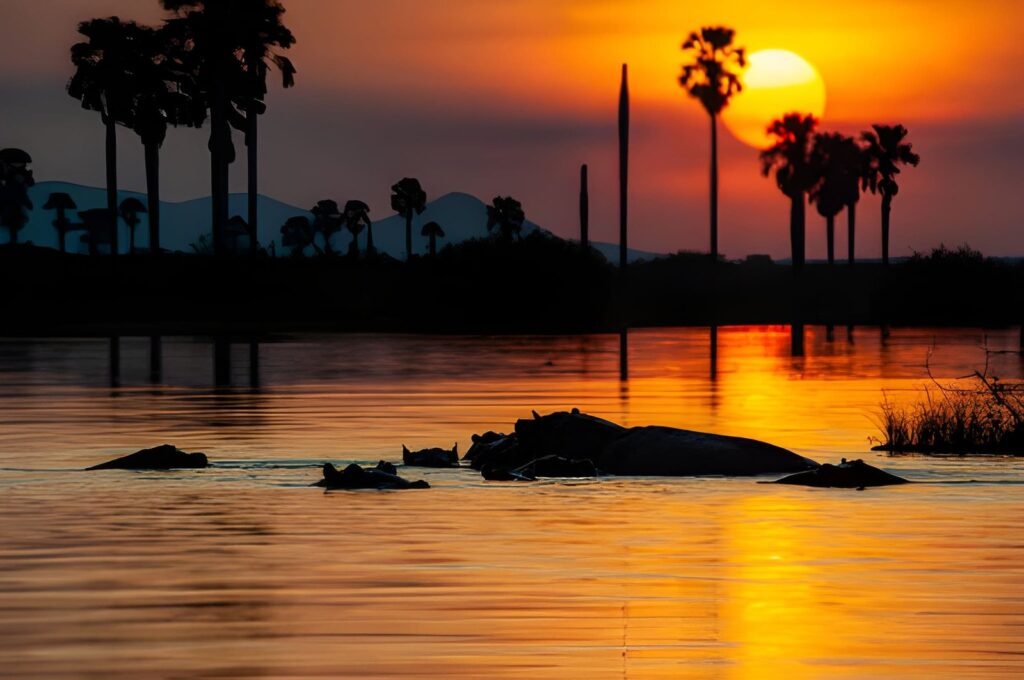
Nyerere National Park is one of Tanzania’s great wilderness destinations and one of the most distinctive safari experiences in the country.
Formerly part of the legendary Selous Game Reserve, the park is defined not only by its wildlife but also by the enormous Rufiji River system, floodplains, lakes and woodland landscapes.
This is a safari destination where you can do more than simply drive through the bush.
You can search for wildlife on a traditional game drive, approach hippos and crocodiles from the water on a boat safari, or explore the wilderness on foot with a guided walking safari.
Nyerere is also particularly important for African wild dogs, while elephants, lions, buffalo, giraffes, hippos and crocodiles are among the other wildlife you may encounter.
If you are considering a safari in Southern Tanzania, Nyerere deserves serious consideration.
Nyerere National Park at a Glance
| Location | Southern Tanzania |
| Regions | Lindi, Morogoro and Ruvuma |
| Former identity | Part of the Selous Game Reserve |
| Main river | Rufiji River |
| Main attractions | Wildlife, boat safaris, wild dogs, walking safaris |
| Wildlife highlights | Elephants, lions, buffalo, hippos, crocodiles, wild dogs |
| Landscape | Floodplains, wetlands, miombo woodland and river channels |
| Best for | Boat safaris, wildlife, walking and quieter wilderness |
TANAPA describes Nyerere as a vast wilderness shaped by the Rufiji River, with floodplains, oxbow lakes, channels and extensive woodland.
Nyerere National Park vs Selous: What’s the Difference?
This is one of the most common sources of confusion when planning a safari in Southern Tanzania.
Selous was historically one of Africa’s largest protected areas.
In 2019, a large northern section of the former Selous Game Reserve was designated as Nyerere National Park, named after Tanzania’s founding president Julius Nyerere.
The name Selous therefore remains extremely important in tourism because the destination has a long history under that name.
You will still see safari companies, travel websites and travelers referring to a “Selous safari.”
Today, however, the national park itself is called Nyerere National Park.
The distinction matters when searching for accommodation, park fees and official information.
Where Is Nyerere National Park?
Nyerere is located in southern Tanzania, covering parts of the Lindi, Morogoro and Ruvuma regions.
Its defining geographical feature is the Rufiji River, which flows through the northern part of the park.
The river has created a network of floodplains, lakes and channels that dramatically changes the character of the safari landscape.
Instead of endless dry plains, you can find:
- River channels
- Oxbow lakes
- Floodplains
- Woodland
- Savannah
- Palm-fringed waterways
- Seasonal wetlands
This combination of habitats is one of the reasons Nyerere feels so different from the classic Northern Circuit parks.
Why Visit Nyerere National Park?
Nyerere’s biggest advantage is variety.
A typical safari here doesn’t have to revolve around one type of experience.
You can start the morning with a game drive, spend part of the afternoon on the Rufiji River and explore on foot on another day.
TANAPA currently highlights three major ways of experiencing the park:
- Game drives
- Boat safaris
- Guided walking safaris
That combination makes Nyerere particularly attractive for travelers who want a safari that feels more immersive than a standard vehicle-based itinerary.
Wildlife in Nyerere National Park
Nyerere supports a wide variety of wildlife across its riverine, woodland and floodplain habitats.
Among the species you may encounter are:
- Elephants
- Lions
- Leopards
- African wild dogs
- Buffalo
- Giraffes
- Hippos
- Crocodiles
- Impala
- Waterbuck
- Eland
- Kudu
- Sable
- Lichtenstein’s hartebeest
- Zebra
- Wildebeest
TANAPA specifically identifies Nyerere as one of East Africa’s important strongholds for African wild dogs, alongside healthy populations of lions and leopards.
African Wild Dogs in Nyerere
African wild dogs are one of the strongest reasons wildlife enthusiasts choose Nyerere.
The species is endangered and occurs in relatively few places in Africa.
Nyerere is considered one of the important strongholds for African wild dogs in East Africa, and conservation efforts in the park include monitoring and protection initiatives.
However, travelers should understand the difference between having a good chance of seeing a species and being guaranteed a sighting.
Wild dogs move over large areas and their location changes constantly.
A safari operator should never promise a wild dog sighting simply because you are visiting Nyerere.
The Rufiji River: The Heart of Nyerere
The Rufiji River is what gives Nyerere much of its personality.
The river and its associated lakes and channels create an ecosystem filled with aquatic and terrestrial wildlife.
Hippos and crocodiles are particularly associated with the waterways, while elephants, buffalo and waterbuck frequently use areas close to the river.
During the dry season, water becomes increasingly important to wildlife, making the river and surrounding wetlands particularly interesting areas for safari.
Boat Safari in Nyerere National Park
A boat safari on the Rufiji River is arguably the experience that most clearly distinguishes Nyerere from many other Tanzanian safari destinations.
Instead of sitting in a vehicle, you explore the wildlife landscape from the water.
You can encounter:
- Hippos
- Crocodiles
- Elephants near the riverbanks
- Waterbuck
- Buffalo
- Waterbirds
- Fish eagles
- Kingfishers
- Other wetland species
TANAPA describes boat safaris on the Rufiji and surrounding lakes as one of the park’s signature experiences.
The perspective is completely different.
A crocodile lying on a sandbank or a group of hippos partially submerged in the water looks very different when you approach from a boat rather than from a safari vehicle.
Game Drives in Nyerere
Game drives remain an essential part of a Nyerere safari.
The park’s extensive network of tracks allows visitors to explore different habitats and search for both predators and herbivores.
Early morning and late afternoon are particularly valuable periods for wildlife viewing because of the cooler temperatures and better light.
TANAPA also notes that the park’s network of smaller tracks can allow vehicles to explore areas away from the main routes and approach wildlife respectfully.
The exact quality of a game drive depends heavily on the guide, season, recent rainfall and where wildlife happens to be on the day.
Walking Safari in Nyerere
Walking provides an entirely different safari experience.
Instead of concentrating only on large animals, you become much more aware of:
- Animal tracks
- Droppings
- Plants
- Insects
- Birds
- Smaller wildlife
- Sounds and movement
TANAPA identifies guided walking safaris as one of Nyerere’s principal visitor activities.
Walking safaris require authorized guides and appropriate arrangements, so this is something to organize through your safari operator rather than attempting independently.
Birdwatching in Nyerere
Nyerere is also an excellent destination for birdwatchers.
The combination of river, wetlands, lakes, woodland and open areas supports a diverse bird population.
TANAPA currently reports more than 430 recorded bird species on its Nyerere wildlife page.
Species associated with the river environment include:
- African fish eagles
- Kingfishers
- Bee-eaters
- Waders
- Other waterbirds
For bird enthusiasts, the boat safari can therefore be just as interesting as the wildlife drive.
Best Time to Visit Nyerere National Park
The best time depends on what you want from your safari.
June to October
The dry season is generally the most straightforward period for classic wildlife viewing.
As water becomes scarcer, wildlife activity can become concentrated around remaining water sources.
This can also make the Rufiji and surrounding wetlands particularly interesting.
For a first-time visitor whose priority is wildlife viewing, the dry season is generally the safest recommendation.
November to February
The landscape becomes greener following seasonal rains.
This can be attractive for photography and birdwatching.
The vegetation may also become denser, which can make some wildlife more difficult to spot.
March to May
The long rains can bring lush landscapes, but travelers should pay more attention to road conditions and accessibility.
Some safari camps and lodges may also operate seasonally.
If your main objective is predictable access and classic wildlife viewing, the dry season is generally preferable.
How to Get to Nyerere National Park
Nyerere is relatively well connected to Dar es Salaam, which is one of its major advantages.
By Air
Scheduled and charter flights connect Dar es Salaam with airstrips serving Nyerere.
TANAPA lists air access to airstrips including Mtemere, Siwandu and Beho Beho.
For travelers with limited time, flying can make Nyerere much easier to incorporate into an itinerary.
By Road
Road access from Dar es Salaam is also possible.
TANAPA’s published material describes routes from Dar es Salaam toward different gates, including the Mtemere and Matambwe areas.
The actual journey time depends on the route, road conditions and starting point, so it is better to confirm the exact transfer when booking rather than relying on a single generic travel time.
Nyerere From Dar es Salaam
One of Nyerere’s biggest strategic advantages is its proximity to Dar es Salaam compared with many of Tanzania’s more remote safari destinations.
This makes it particularly useful for travelers arriving through Dar es Salaam.
A practical itinerary could be:
Dar es Salaam → Nyerere → Zanzibar
This works particularly well for travelers who want to combine a Southern Tanzania safari with a beach holiday.
Another possibility is:
Dar es Salaam → Nyerere → Mikumi → Ruaha
for travelers who want a longer Southern Circuit safari.
Nyerere and Zanzibar: The Bush-to-Beach Combination
Nyerere is an excellent candidate for a safari + Zanzibar itinerary.
The basic concept is simple:
Safari in Nyerere → fly to Zanzibar → beach holiday
This combination gives travelers two very different sides of Tanzania:
Wildlife + wilderness + river safari
followed by
Indian Ocean beaches + Stone Town + island experiences
For travelers who do not have enough time for a long Northern Circuit safari, this can be a particularly attractive way to experience Tanzania.
How Many Days Do You Need in Nyerere?
1 Day
A one-day safari is possible, particularly for travelers flying in and out.
However, it gives you limited flexibility.
You may have time for a game drive or boat safari, but fitting several activities into one day can make the experience rushed.
2 Days
Two nights is a much better starting point.
This gives you enough time to combine experiences such as:
- Game drive
- Boat safari
- Walking safari
without trying to do everything in a single day.
3 Days
Three days is ideal for travelers who want a deeper experience.
You can dedicate different periods to different environments rather than treating the park as a quick stop.
For a traveler specifically interested in Nyerere rather than simply checking off another national park, 2–3 days is a sensible range.
Nyerere National Park Fees 2026/27
The following figures are based on the International Non-Resident (NR) rates in the tariff data supplied for this article.
The tariff covers July 1, 2026 to June 30, 2027, but some individual rates have their own validity periods.
Main Nyerere Fees for International Visitors
| Fee | International NR | Approx. USD* |
|---|---|---|
| Adult entrance — ENTRY HIGH | TZS 178,850 | $66.98 |
| Child entrance, 5–15 | TZS 51,100 | $19.14 |
| Boat safari, adult | TZS 51,100 | $19.14 |
| Canoeing, adult | TZS 51,100 | $19.14 |
| Night game drive, adult | TZS 127,750 | $47.84 |
| Public camping, adult | TZS 76,650 | $28.70 |
| Hostel per person | TZS 25,550 | $9.57 |
| Rest house per head | TZS 76,650 | $28.70 |
| Long walking safari, adult | TZS 63,875 | $23.92 |
| Short walking safari, adult | TZS 51,100 | $19.14 |
| Sport fishing, adult | TZS 63,875 | $23.92 |
| Seasonal camping, adult | TZS 153,300 | $57.41 |
| Special camping, adult | TZS 153,300 | $57.41 |
| Concession fee, adult* | TZS 153,300 | $57.41 |
The figures are extracted from the NR / International Non-Resident entries in the supplied Nyerere tariff.
Important Entrance-Fee Note
The TZS 178,850 adult entrance fee is specifically listed as ENTRY HIGH from May 16, 2026 to March 14, 2027.
The supplied tariff does not show a separate NR adult entrance amount for March 15–June 30, 2027.
Therefore, we should not invent a low-season entrance price for that period.
Travelers booking dates after March 14, 2027 should confirm the applicable entrance rate with TANAPA or their safari operator.
What Does a Nyerere Safari Actually Cost?
This is where many safari price comparisons become misleading.
The TANAPA fees above are not the total price of a safari.
A safari package may also include:
- Safari vehicle
- Professional driver-guide
- Accommodation
- Meals
- Road or airport transfers
- Domestic flights
- Boat arrangements
- Walking safari arrangements
- Park vehicle fees
- Concession fees where applicable
- Tips
- Personal expenses
For example, two international adults paying the listed high-season entrance rate would pay:
2 × TZS 178,850 = TZS 357,700
At the exchange rate used below, that is approximately:
US$133.95
But US$133.95 is not a two-person safari price.
It represents the two adult entrance fees only.
The actual safari quote will be considerably higher once transportation, accommodation, guide, vehicle and other services are included.
Planning a Nyerere Safari?
A Nyerere safari can be designed around your budget, travel dates and preferred style of accommodation.
Private safaris · Nyerere National Park · Southern Tanzania
USD Conversion Note
For consistency with the other Tanzania Guide fee articles, the USD equivalents above use:
US$1 = TZS 2,670.23
using the exchange rate from August 15, 2026.
Exchange rates change continuously, so the USD figures are approximate.
The actual TANAPA charge is denominated in Tanzanian shillings.
What About Children Under 5?
The tariff supplied for Nyerere lists a specific child category for ages 5–15.
TANAPA’s visitor information states that children under five enter free.
However, parents should distinguish park entrance from other possible costs such as accommodation, transfers or activities.
Nyerere vs Mikumi
Nyerere and Mikumi are both Southern Tanzania destinations, but they serve different purposes.
Choose Nyerere if you want:
- Boat safaris
- Rufiji River landscapes
- African wild dogs
- A larger wilderness experience
- Walking safaris
- Hippos and crocodiles
- A more immersive Southern Circuit experience
Choose Mikumi if you want:
- Easier road access from Dar es Salaam
- A shorter safari
- Classic game viewing
- A convenient introduction to Southern Tanzania
Our Mikumi National Park Safari Guide can be used alongside this article when comparing the two.
Nyerere vs Serengeti
Nyerere should not be viewed as a cheaper or smaller Serengeti.
They offer different experiences.
Serengeti is stronger for:
- Great Migration
- Vast open plains
- Large predator concentrations
- Iconic Northern Tanzania scenery
- Classic first-time safari experiences
Nyerere is stronger for:
- Boat safaris
- River and wetland ecosystems
- African wild dogs
- Walking safaris
- A quieter Southern Tanzania experience
If your dream safari is watching the Great Migration, Serengeti is the obvious choice.
If you want to combine wildlife with water-based exploration, Nyerere has a major advantage.
Nyerere vs Ruaha
Nyerere and Ruaha are two of the most important Southern Tanzania safari destinations.
Ruaha is particularly famous for its huge landscapes, elephants, baobabs and strong predator populations.
Nyerere has something Ruaha does not offer in the same way:
the Rufiji River and its boat safari experience.
For travelers with enough time, combining the two can create an excellent Southern Circuit itinerary.
You can read more about Southern Tanzania in our Ruaha Safari Guide.
Is Nyerere National Park Worth Visiting?
Yes — particularly if you want more than a traditional game drive.
Nyerere’s strongest selling point is the combination of:
wildlife + river + boat safari + walking + wilderness.
The Rufiji River changes the safari experience completely.
You can spend one morning tracking wildlife from a vehicle and later observe hippos, crocodiles and waterbirds from the water.
Add African wild dogs, elephants and a much quieter atmosphere than Tanzania’s most famous Northern Circuit destinations, and Nyerere becomes one of the country’s most interesting safari options.
Who Should Visit Nyerere?
Nyerere is particularly suitable for:
- Couples
- Wildlife enthusiasts
- Photographers
- Repeat Tanzania visitors
- Travelers who enjoy boat safaris
- Travelers interested in African wild dogs
- Travelers looking for quieter parks
- Visitors combining safari with Zanzibar
- Travelers exploring Southern Tanzania
It is especially attractive for people who don’t want their entire safari to consist of sitting in a vehicle.
Can You Combine Nyerere With Zanzibar?
Absolutely.
In fact, this is one of the strongest combinations in Tanzania.
A simple itinerary could look like:
Day 1: Dar es Salaam
Days 2–4: Nyerere National Park
Days 5–8: Zanzibar
The exact number of days can be adjusted according to flights, budget and whether you want more safari or more beach time.
For travelers interested in a longer Tanzania trip, our Tanzania Safari and Zanzibar itinerary can be used as a starting point.
Frequently Asked Questions About Nyerere National Park
Is Nyerere National Park the same as Selous?
Not exactly in terminology. Nyerere National Park was created from a large northern section of the former Selous Game Reserve. “Selous” remains widely used in tourism, but the national park is officially Nyerere National Park.
What is Nyerere National Park famous for?
It is particularly known for the Rufiji River, boat safaris, elephants, hippos, crocodiles and African wild dogs.
Can you do a boat safari in Nyerere?
Yes. Boat safaris on the Rufiji River and associated lakes are one of the park’s signature experiences.
Can you see African wild dogs in Nyerere?
Nyerere is one of East Africa’s important strongholds for African wild dogs, but sightings cannot be guaranteed because they are wild, mobile animals.
How many days do you need in Nyerere?
Two to three days is a good range for travelers who want to experience more than a quick game drive, particularly if they want to combine game drives with a boat or walking safari.
What is the Nyerere entrance fee for international visitors?
The supplied 2026/27 tariff lists TZS 178,850 per international adult during the ENTRY HIGH period from May 16, 2026 to March 14, 2027. The supplied data does not show the NR adult rate for March 15–June 30, 2027, so that later-period rate should be confirmed before booking.
Is Nyerere good for families?
It can be, particularly for families who enjoy wildlife and nature. However, families should check age restrictions and requirements for specific activities such as walking safaris.
Can Nyerere be combined with Mikumi?
Yes. The two parks can be combined as part of a Southern Tanzania itinerary, depending on available time and road/flight logistics.
Planning a Nyerere National Park Safari?
Nyerere is not simply another national park to add to a checklist.
Its real strength is the combination of land and water: game drives through the wilderness, boat safaris along the Rufiji, walking experiences and the possibility of encountering some of Tanzania’s most fascinating wildlife.
For travelers who want a private, tailor-made Southern Tanzania safari, Nyerere can also work particularly well as part of a larger itinerary connecting Mikumi, Ruaha and Zanzibar.
Private safaris · Southern Tanzania · Tailor-made Tanzania trips