Great Migration Safari in Tanzania: The Complete Guide (2026)
The Great Migration is one of the most extraordinary wildlife spectacles on Earth.
Every year, more than 1.5 million wildebeest — along with hundreds of thousands of zebras and gazelles — move across the plains of Tanzania in search of fresh grass and water.
This constant movement creates dramatic encounters between predators and prey. It is one of the most powerful safari experiences you can witness.
If you are planning your trip, start by understanding your budget with this complete Tanzania safari cost guide.
What Is the Great Migration?
The Great Migration is a continuous, year-round movement of animals across the Serengeti ecosystem.
It is not a single event. It is a survival cycle driven by rainfall and grazing conditions.
At its peak, the migration includes:
- Over 1.5 million wildebeest
- Around 300,000 zebras
- Thousands of gazelles
Predators follow the herds closely, creating intense wildlife interactions.
To understand what animals you will encounter, explore this wildlife of Tanzania guide.
Where Does the Migration Take Place?
The migration mainly takes place in Serengeti National Park in Tanzania and extends into Kenya’s Maasai Mara.
However, most of the action happens inside Tanzania.
The key regions include:
- Southern Serengeti (Ndutu)
- Central Serengeti (Seronera)
- Western Corridor (Grumeti)
- Northern Serengeti (Kogatende)
Each region offers a completely different experience depending on the time of year.
Great Migration Calendar (Month by Month)
Timing is the most important factor when planning your safari.
January to March – Calving Season
This is one of the most rewarding periods.
Thousands of wildebeest give birth in the southern Serengeti.
- Best location: Ndutu
- Highlights: Baby animals and predator activity
- Best for: Photography and first-time visitors
April to May – Green Season
The herds begin moving northwest.
- Best location: Central Serengeti
- Highlights: Fewer tourists and lush landscapes
This is a great time for a quieter and more affordable safari.
June to July – Grumeti River Crossings
The migration reaches the western corridor.
- Best location: Western Serengeti
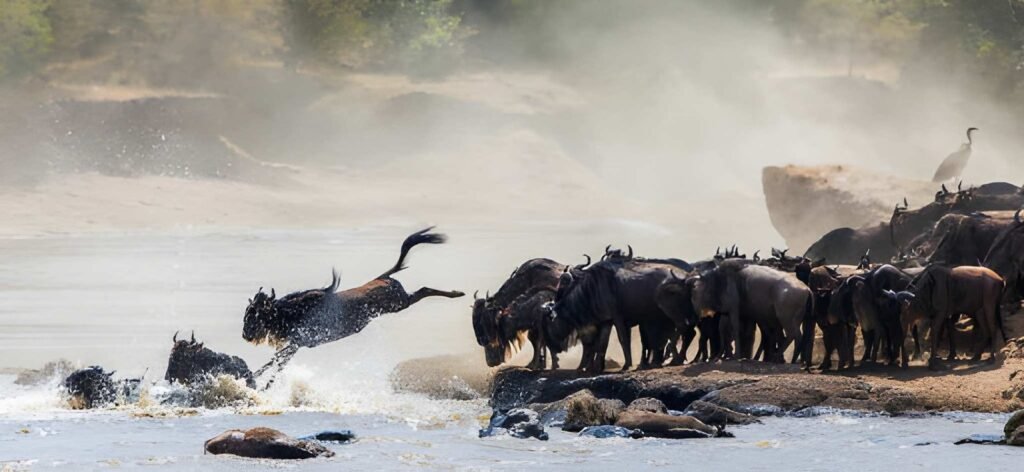
- Highlights: First dramatic river crossings
August to October – Mara River Crossings
This is the most iconic phase of the migration.
- Best location: Northern Serengeti
- Highlights: River crossings, crocodiles, and intense action
This is also peak season, so early booking is essential.
November to December – Return South
The herds move back toward the southern Serengeti.
- Best location: Central and Southern Serengeti
- Highlights: Scenic landscapes and fewer crowds
Best Time to See the Great Migration
The best time depends on your travel goals.
- For river crossings → July to October
- For calving season → January to March
- For fewer crowds → April to May
To plan your entire journey, follow this Tanzania travel planning guide.
What Animals Will You See?
The migration is not only about wildebeest.
You will also see:
- Lions
- Leopards
- Cheetahs
- Hyenas
- Crocodiles
- Elephants
This makes it one of the richest wildlife experiences in Africa.
Types of Migration Safari Experiences
There are several ways to experience the migration.
Classic Safari
The most common option.
- Guided game drives
- Flexible itineraries
- Ideal for beginners
Luxury Safari
A high-end experience with premium lodges.
- Fly-in safaris
- Private guides
- Exceptional comfort
Mobile Camp Safari
These camps move with the migration.
- Closer to wildlife
- More immersive experience
Balloon Safari
A unique perspective from above.
- Sunrise flights
- Panoramic views
- Premium experience
How Much Does a Migration Safari Cost?
Prices vary depending on your travel style.
- Budget → $200–350 per day
- Mid-range → $400–700 per day
- Luxury → $800–1500+ per day
You can explore a full breakdown in this detailed Tanzania safari law cost
How Many Days Do You Need?
The duration of your safari matters.
- Minimum → 4 to 5 days
- Recommended → 6 to 8 days
- Ideal → 8 to 10 days
More days increase your chances of seeing key migration moments.
👉
You can follow this exact route with our 7-day Northern Circuit safari itinerary.
Best Serengeti Areas by Season
Choosing the right location is critical.
- Ndutu → January to March
- Seronera → April to June
- Western Corridor → June to July
- Northern Serengeti → July to October
Expert Tips for Planning
- Book at least 4 to 6 months in advance
- Stay close to the migration
- Choose experienced guides
- Be flexible with your itinerary
Combine Migration Safari with Zanzibar
After your safari, relaxing on the beach is the perfect ending.
You can plan the full experience using this Tanzania safari and Zanzibar itinerary .
Common Mistakes to Avoid
- Choosing the wrong region
- Expecting guaranteed river crossings
- Booking too late
- Underestimating travel logistics
Final Thoughts
A Great Migration safari is not just a trip.
It is one of the most powerful natural experiences on Earth.
From endless herds moving across the plains to dramatic river crossings, every moment feels alive.
If you plan it correctly, it will become a journey you will never forget.