
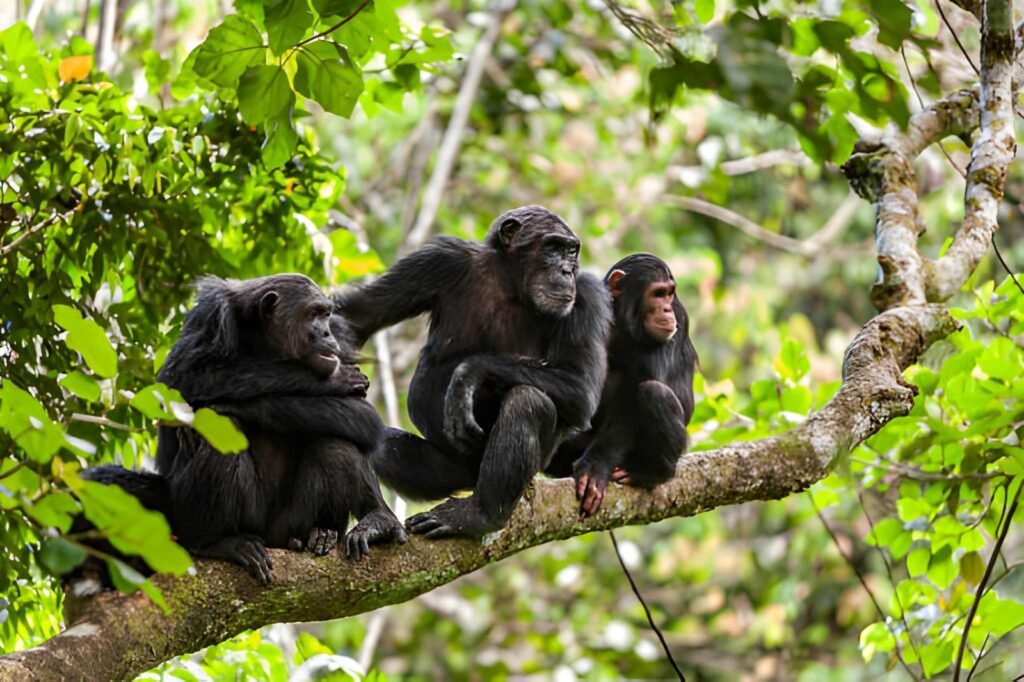
Mahale Mountains National Park is one of Tanzania’s most remote and distinctive wildlife destinations.
Located on the eastern shore of Lake Tanganyika in western Tanzania, Mahale combines wild chimpanzee trekking with rainforest-covered mountains, hiking, beaches and freshwater activities. TANAPA describes the park as a destination for chimpanzee trekking, hiking, snorkeling, sport fishing, boat trips and other lake-based experiences.
Unlike the classic safari parks of northern Tanzania, Mahale is not primarily about driving across open savannah looking for lions and elephants.
Here, the experience is much more immersive.
You walk into the forest looking for chimpanzees, hike through mountain trails and return to the shores of Lake Tanganyika.
For travelers looking for a quieter and more unusual side of Tanzania, Mahale can be one of the country’s most rewarding destinations.
Where Is Mahale Mountains National Park?
Mahale Mountains National Park is located in Kigoma Region in western Tanzania, on the eastern shore of Lake Tanganyika.
The park covers approximately 1,613 km², including both terrestrial and aquatic areas. It was gazetted as a national park in 1985.
Its remote location is one of the reasons Mahale feels so different from destinations such as Serengeti, Ngorongoro and Tarangire.
There are no major roads connecting Mahale directly to the northern safari circuit. Getting there requires more planning, but that remoteness is part of the attraction.
Why Is Mahale Mountains National Park Famous?
Mahale is best known for its wild chimpanzees.
TANAPA states that more than 1,000 chimpanzees live within the park, including the famous M Group, which has been studied for more than 60 years.
But chimpanzees are only part of the experience.
Mahale also offers:
- Tropical rainforest
- Mountain hiking
- Lake Tanganyika beaches
- Snorkeling
- Kayaking
- Boat trips
- Sport fishing
- Guided walks
- Birdwatching
- A remote wilderness atmosphere
The combination of mountains, rainforest and a huge freshwater lake is what makes Mahale so different from a conventional Tanzania safari.
Chimpanzee Trekking in Mahale
For most international travelers, chimpanzee trekking is the main reason to visit Mahale.
The experience takes place on foot inside the forest.
Instead of watching wildlife from a safari vehicle, you follow experienced guides through forest trails while looking and listening for chimpanzees.
When you find them, you may see them feeding, climbing, moving through the forest or interacting with members of their group.
TANAPA’s chimpanzee-viewing guidelines specify that a tracking group in Mahale must not exceed six people, including the guide, and the maximum viewing time for a group is one hour.
This makes the experience quite different from a conventional game drive.
Is chimpanzee trekking difficult?
The difficulty can vary.
You are walking through a natural forest environment rather than following a flat safari-road circuit. Trails can involve uneven ground and changes in elevation.
Your guide determines the appropriate route and helps visitors move safely through the forest.
If you enjoy walking and active wildlife experiences, this is one of Mahale’s strongest advantages.
Other Things to Do in Mahale Mountains National Park
Chimpanzee trekking may be the headline experience, but Mahale offers enough activities to justify staying several days.
Mountain Hiking
The Mahale Mountains rise behind the lake and provide opportunities for guided walks and longer hikes.
TANAPA lists both short and long guided walks as well as mountain hiking among the park’s tourism activities.
The combination of forest trails and views toward Lake Tanganyika makes hiking here very different from hiking on Tanzania’s open savannah.
Swimming in Lake Tanganyika
After a morning trekking through the forest, Lake Tanganyika offers a completely different experience.
The lake’s shoreline includes sandy beaches and quiet bays, allowing visitors to combine wildlife activities with relaxation.
This chimpanzee trekking + lakeside experience is one of the strongest reasons to choose Mahale over a more conventional safari destination.
Snorkeling
Lake Tanganyika is famous for its freshwater biodiversity.
TANAPA lists snorkeling among the activities available in Mahale.
Kayaking
Kayaking is another way to explore the lake and experience Mahale from the water.
The current 2026/27 TANAPA tariff lists a separate kayaking charge for international visitors.
Boat Trips
Boat trips allow visitors to explore the shoreline and surrounding waters.
TANAPA also lists boat cruising among Mahale’s available activities.
Sport Fishing
Sport fishing is available in the park and has its own TANAPA charges.
Visitors interested in fishing should check the applicable equipment and activity requirements when planning the trip.
Wildlife in Mahale Mountains National Park
Mahale is primarily known for chimpanzees, but the forest supports a much wider range of wildlife.
TANAPA’s park information lists species including:
- Chimpanzees
- Yellow baboons
- Vervet monkeys
- Blue monkeys
- Red-tailed monkeys
- Angolan colobus
- Red colobus
- Duikers
- Bush pigs
- Bushbucks
- Leopards
- Numerous bird species
This means Mahale should not be viewed simply as a chimpanzee destination.
It is an entire forest ecosystem surrounding one of Africa’s great lakes.
If your main priority is the classic Big Five safari experience, however, other Tanzanian parks may be a better fit.
How to Get to Mahale Mountains National Park
Mahale’s remote location means that transportation needs to be planned carefully.
By Air
TANAPA states that Mahale can be reached by scheduled flights from destinations including Kigoma, Mwanza, Arusha and Dar es Salaam, with flights serving Mahale Airstrip.
For many international travelers, flying is the most practical option.
However, flight schedules can vary, so your itinerary should be built around the actual flights available for your travel dates.
By Boat
Another option is traveling by water from Kigoma.
TANAPA lists the MV Liemba as a historical weekly ferry option from Kigoma, while private/public boat options can also be used to reach the park.
The lake journey itself can become part of the Mahale experience.
By Road and Boat
TANAPA also describes an overland route from Kigoma followed by a boat journey to the park.
Because of the distances and logistics involved, Mahale is generally better planned as a dedicated part of an itinerary rather than a spontaneous addition.
Best Time to Visit Mahale Mountains National Park
The best time depends on what you want to do.
For chimpanzee trekking and hiking, drier conditions can make walking trails more comfortable.
The park can also be attractive during greener periods, but travelers should expect potentially wetter conditions and more challenging trails.
If chimpanzee trekking is your priority, July through October is a practical period to consider, while the exact conditions can vary from year to year.
Because Mahale is remote, I would also consider transport reliability and flight schedules when choosing travel dates rather than looking only at weather.
How Many Days Do You Need in Mahale?
I would not recommend traveling all the way to Mahale for a single overnight stay.
The journey is too significant, and the destination offers more than one activity.
3 days
A three-day stay can work for travelers who mainly want chimpanzee trekking and a short introduction to the lake.
4–5 days
For most travelers, this is more comfortable.
It gives you time for:
- Chimpanzee trekking
- Hiking
- Lake activities
- Relaxation
- Weather flexibility
5+ days
A longer stay makes sense if you want a slower experience combining wildlife, hiking and several Lake Tanganyika activities.
The more effort it takes to reach a remote destination, the more important it becomes not to rush through it.
Mahale Mountains National Park Fees & Costs 2026/27
Mahale’s park fees are only one part of the total cost of a trip.
You also need to consider accommodation, flights or boat transfers, meals, guides and optional activities.
The following figures are for international non-resident visitors (NR) and are valid for the 2026/27 financial year, from July 1, 2026 to June 30, 2027, based on the TANAPA tariff data provided for this article.
Main Mahale Fees for International Visitors
| Fee | International visitor (NR) | Approx. USD* |
|---|---|---|
| Adult park entrance | TZS 204,400 | $76.55 |
| Child entrance, 5–15 years | TZS 51,100 | $19.14 |
| Chimpanzee habituation experience | TZS 255,500 | $95.68 |
| Long walking safari | TZS 63,875 | $23.92 |
| Short walking safari | TZS 51,100 | $19.14 |
| Boating safari | TZS 51,100 | $19.14 |
| Canoeing | TZS 25,550 | $9.57 |
| Kayaking | TZS 25,550 | $9.57 |
| Snorkeling | TZS 25,550 | $9.57 |
| Sport fishing | TZS 63,875 | $23.92 |
| Sport fishing rod fee | TZS 51,100 | $19.14 |
| Public camping, adult | TZS 76,650 | $28.70 |
| Seasonal camping, adult | TZS 127,750 | $47.84 |
| Special camping, adult | TZS 127,750 | $47.84 |
| Rest house, per person | TZS 102,200 | $38.27 |
| Bandas, adult | TZS 102,200 | $38.27 |
| Concession fee, adult | TZS 76,650 | $28.70 |
What does a Mahale safari actually cost?
The table above should not be added together.
A traveler does not normally pay for every activity.
For example, someone coming primarily for chimpanzee trekking might pay the entrance fee and the applicable chimpanzee activity fee, then add accommodation and transportation.
Someone staying longer might also choose kayaking, snorkeling, hiking or boating.
The biggest cost difference between travelers is therefore often not the entrance fee itself, but how they reach Mahale and where they stay.
Example: two international adults
Two international adults would pay:
2 × TZS 204,400 = TZS 408,800
for the adult entrance fees alone.
Using the exchange rate below:
TZS 408,800 ÷ 2,670.23 ≈ US$153.09
This is not the price of a two-person Mahale safari. It represents only the two adult entrance fees.
If both travelers also participate in the listed chimpanzee habituation experience:
2 × TZS 255,500 = TZS 511,000
or approximately:
US$191.37
Again, this is an activity charge, not a complete safari price.
USD conversion note: The USD equivalents in this article use US$1 = TZS 2,670.23 on August 15, 2026. Exchange rates change, so dollar figures are approximate. TANAPA fees are charged in Tanzanian shillings according to the applicable tariff.
What about children under 5?
The Mahale tariff data used for this article specifies a child rate for ages 5–15, but does not include a separate Mahale line for children under five.
Therefore, we should not assume a specific under-five Mahale charge from this table alone. Families traveling with a child under five should confirm the applicable rule with TANAPA or their safari operator before booking.
Mahale vs Katavi: Which Is Better?
Mahale and Katavi are both remote Tanzanian destinations, but they offer very different experiences.
Katavi is a classic remote wilderness safari, with game drives and large concentrations of wildlife.
Mahale is more focused on chimpanzees, forest, mountains and Lake Tanganyika.
So the choice depends on what you want.
| If you want… | Consider… |
|---|---|
| Chimpanzee trekking | Mahale |
| Lake Tanganyika | Mahale |
| Forest hiking | Mahale |
| Classic game drives | Katavi |
| Remote wilderness | Both |
| A more unusual Tanzania experience | Mahale |
| Large savannah wildlife experience | Katavi |
You can also combine the two if your budget and travel time allow it.
Our Katavi National Park Safari Guide provides a detailed look at the other major remote safari destination in western Tanzania.
Is Mahale Mountains National Park Worth Visiting?
For the right traveler, yes.
Mahale is not the destination I would recommend if your only goal is to see as many Big Five animals as possible in the shortest amount of time.
But if you want something more unusual, Mahale offers a combination that is difficult to reproduce elsewhere:
Chimpanzees + rainforest + mountains + Lake Tanganyika.
The destination is particularly attractive for travelers who enjoy:
- Wildlife encounters on foot
- Remote destinations
- Chimpanzees
- Hiking
- Lakeside relaxation
- Nature and photography
- Fewer crowds
- Experiential travel
The journey requires more planning than a Northern Circuit safari, but that is precisely what makes Mahale feel different.
How to Add Mahale to a Tanzania Itinerary
Mahale works best when you give it enough time.
Rather than trying to squeeze it between several northern parks, consider building a western Tanzania itinerary around Mahale and possibly Katavi.
If you are still deciding which parts of Tanzania to visit, our Tanzania Destinations guide can help you compare the country’s different regions and experiences.
For a broader look at Tanzania’s wildlife, see our Wildlife of Tanzania guide.
And if you’re trying to estimate the overall cost of a Tanzania trip, our Tanzania Travel Cost guide covers safari, Zanzibar and Kilimanjaro expenses.
Frequently Asked Questions About Mahale Mountains National Park
What is Mahale Mountains National Park famous for?
Mahale is famous primarily for its habituated chimpanzees, as well as its location on the shores of Lake Tanganyika and its forested mountain landscape.
Can you see chimpanzees in Mahale?
Yes. Chimpanzee trekking and viewing are among the park’s main attractions. TANAPA’s guidelines specifically regulate chimpanzee tracking groups and viewing time in Mahale.
How much is the Mahale entrance fee for international visitors?
For the 2026/27 tariff supplied for this guide, the adult international non-resident entrance fee is TZS 204,400, approximately US$76.55 at the exchange rate used in this article.
How much is chimpanzee habituation in Mahale?
The 2026/27 tariff lists the chimpanzee habituation experience at TZS 255,500 per international non-resident, approximately US$95.68.
This is a specific activity fee and should not be confused with the general park entrance fee.
How do you get to Mahale Mountains National Park?
Mahale can be reached by air to Mahale Airstrip, by boat from Kigoma, or through combinations of road and boat travel.
Is Mahale part of Tanzania’s Northern Circuit?
No.
Mahale is in western Tanzania, in Kigoma Region. It should be treated as a separate western Tanzania destination rather than a standard Northern Circuit stop.
How many days should you spend in Mahale?
For most travelers, 3–5 days is a reasonable starting point. A longer stay makes sense if you want to combine chimpanzee trekking with hiking and several Lake Tanganyika activities.
Is Mahale good for families?
It can be, but families should consider the physical nature of chimpanzee trekking and the logistical difficulty of reaching the park. Families traveling with young children should also confirm the applicable age rules and activity restrictions before booking.
Planning a Mahale Mountains Adventure?
Mahale is not a destination you should simply add to an itinerary at the last minute.
Flights, boat transfers, accommodation, chimpanzee activities and the number of days available all need to work together.
If you want to combine Mahale with Katavi or other parts of Tanzania, a tailor-made itinerary can make the logistics much easier.
Private safaris · Mahale & Western Tanzania · Tailor-made Tanzania trips