Lake Manyara National Park is one of Tanzania’s most distinctive safari destinations.
Set beneath the dramatic escarpment of the Great Rift Valley, the park combines groundwater forests, open woodland, wetlands and an alkaline lake in a relatively compact area. It is particularly known for tree-climbing lions, large elephant herds, birdlife and its unusual variety of landscapes.
But is Lake Manyara worth visiting?
For travelers exploring Tanzania’s Northern Circuit, the answer can be yes—especially if you value diverse scenery, elephants, birdwatching, forest wildlife and a safari experience that feels different from the open plains of the Serengeti.
This guide explains what to see, when to visit, how to get there, what activities are available, Lake Manyara National Park fees for 2026/27, and how to fit the park into a wider Tanzania safari.
Lake Manyara National Park at a Glance
| Location | Northern Tanzania |
| Safari circuit | Northern Circuit |
| Area | 648.7 km² |
| Main landscape | Alkaline lake, groundwater forest, woodland and wetlands |
| Famous for | Tree-climbing lions, elephants and birdlife |
| Main activity | Game drives |
| Other activities | Canopy walk, walking safaris, canoeing, birdwatching and more |
| Nearest town | Mto wa Mbu |
| Best known access | Road from Arusha |
TANAPA places Lake Manyara on Tanzania’s Northern Safari Circuit, just south of Mto wa Mbu. The park is approximately 125 km from Arusha by road, normally around 2–2.5 hours in good conditions.
Why Visit Lake Manyara National Park?
Lake Manyara is not simply a smaller alternative to the Serengeti.
Its appeal comes from the combination of habitats within a relatively compact park.
Within one safari, you can move from lush groundwater forest to open woodland, floodplain, wetlands and the shores of the alkaline lake, with the Rift Valley escarpment providing a dramatic backdrop.
The park is particularly attractive if you want:
- Tree-climbing lions
- Elephants
- Excellent birdwatching
- Forest landscapes
- Flamingos and other waterbirds
- Rift Valley scenery
- Walking and canopy experiences in addition to game drives
- A Northern Circuit itinerary that includes more than the classic big parks
If your priority is the Great Migration or vast open plains, however, Serengeti should remain a major part of your itinerary. See our Serengeti National Park Safari Guide.
Lake Manyara Wildlife: What Animals Can You See?
Lake Manyara supports a surprisingly diverse range of wildlife.
TANAPA highlights elephants, tree-climbing lions, buffalo, zebra, wildebeest, giraffe, hippos, primates and a large variety of birds among the park’s wildlife.
Tree-Climbing Lions
The park’s famous tree-climbing lions are one of its biggest attractions.
Seeing a lion resting in the branches of an acacia tree is never guaranteed, but Manyara is particularly associated with this unusual behavior.
TANAPA itself describes the park as a home of tree-climbing lions.
Elephants
Elephants are another major reason to visit Manyara.
The park’s forests and woodland provide an important habitat for them, and elephant sightings can be a highlight of a game drive.
Buffalo, Zebra and Wildebeest
Open areas and floodplains support large herbivores including buffalo, zebra and wildebeest.
Giraffes
Giraffes can be seen browsing in the park’s woodland and more open areas.
Hippos
Hippo pools and wetlands around the lake provide opportunities to observe these large semi-aquatic mammals from safe viewing areas.
Monkeys and Baboons
The groundwater forest is particularly interesting for primates.
Blue monkeys and baboons are among the species visitors may encounter in the forest environment.
Birdwatching in Lake Manyara
If you enjoy birds, Lake Manyara deserves serious consideration.
The combination of lake, wetlands, forest and woodland creates habitats for a wide range of species.
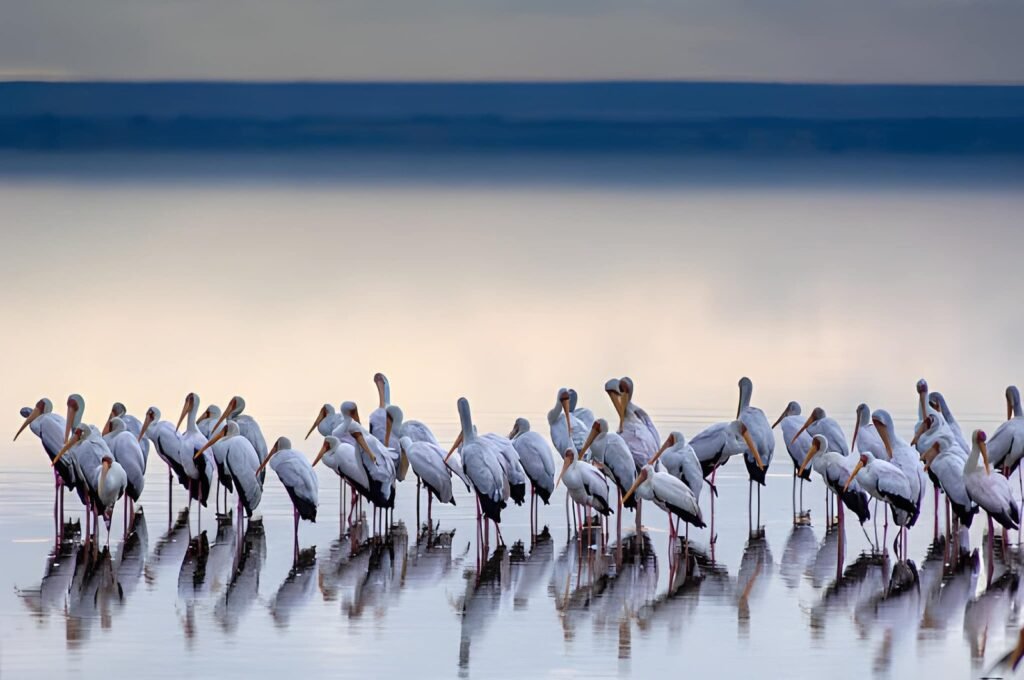
TANAPA currently lists more than 400 bird species recorded in the park, including flamingos, pelicans, storks, herons, fish eagles and other waterbirds.
The alkaline lake can also produce spectacular seasonal concentrations of flamingos.
This makes Manyara particularly interesting for travelers who want more than a traditional Big Five-focused safari.
Lake Manyara’s Landscapes
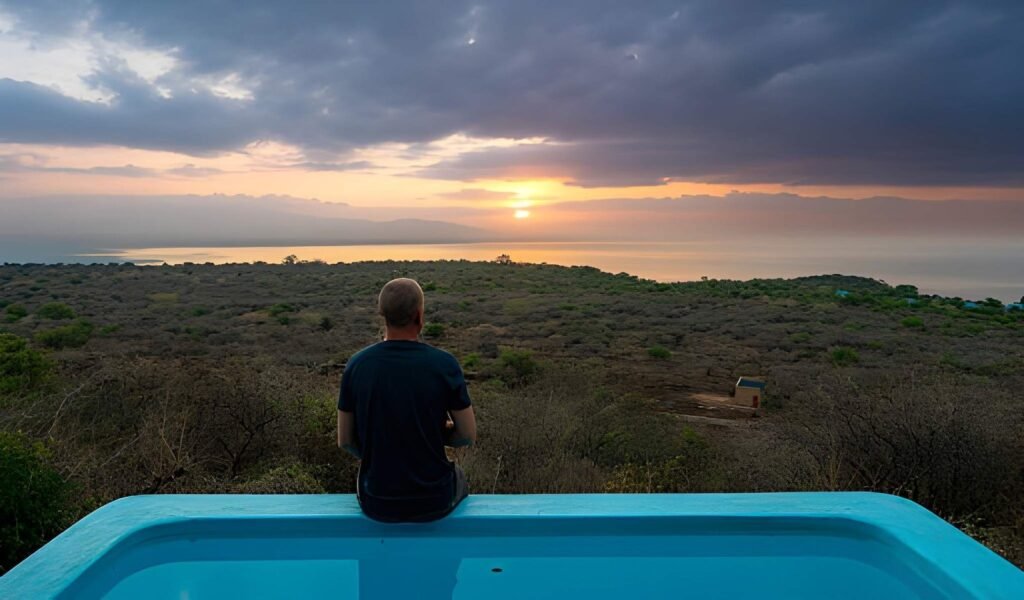
One of the park’s greatest strengths is its variety.
Groundwater Forest
The groundwater forest is one of the first major landscapes visitors encounter.
Fed by underground springs, it remains lush and green and provides habitat for primates, birds and other wildlife.
Alkaline Lake
Lake Manyara itself is a soda lake whose appearance and water levels change seasonally.
Its shores attract flamingos and numerous other waterbirds.
Great Rift Valley Escarpment
The western escarpment rises dramatically above the park and gives Manyara some of its most impressive scenery.
The combination of cliffs, forest, lake and floodplain makes the landscape very different from the open savannah of the Serengeti.
Wetlands and Hippo Pools
Wetlands around the lake support hippos and numerous waterbirds.
Hot Springs
Maji Moto, or the park’s hot-spring area, is another geological feature that can be incorporated into a visit depending on the route and conditions. TANAPA lists hot springs among Manyara’s natural attractions.
Things to Do in Lake Manyara National Park
Game Drives
Game drives are the park’s main safari activity.
They allow you to explore the different habitats and look for elephants, lions, giraffes, buffalo, primates and other wildlife.
Because Manyara is relatively compact and located conveniently on the Northern Circuit, it is often visited as part of a broader itinerary rather than as a destination requiring several full safari days.
Canopy Walk
The canopy walkway provides a completely different perspective of the forest.
TANAPA describes it as one of the longest canopy walkways in Africa, with viewing decks above the forest floor where visitors can observe birds, butterflies and monkeys.
Walking Safari
Walking safaris offer a more immersive way to experience the park’s landscapes.
The experience is different from a game drive: rather than covering large distances looking for wildlife, you focus more closely on tracks, plants, smaller animals, birds and the surrounding environment.
Canoeing
Canoeing can be available depending on water conditions.
It is an especially different way to experience the lake, although availability should be confirmed when planning your trip. TANAPA’s park materials list canoeing among the available activities.
Night Game Drive
Night game drives provide an opportunity to experience the park after dark and look for nocturnal wildlife.
Availability and conditions should be confirmed with the park or your safari operator before booking.
Bush Meals
A bush meal can turn a normal safari lunch into part of the experience, allowing travelers to eat in a designated wilderness setting rather than returning to a lodge.
Lake Manyara National Park Fees 2026/27
If you’re planning a safari, it is important to understand that TANAPA park fees are not the same thing as the total price of a safari.
Your final safari quote can also include the vehicle, driver-guide, accommodation, meals, transfers, operator costs and optional activities.
The following figures are based on the 2026/27 tariff data you provided for international visitors (NR).
Core Entrance Fees
| Visitor | TANAPA fee | Approx. USD* |
|---|---|---|
| Adult | TZS 127,750 | $47.84 |
| Child 5–15 years | TZS 38,325 | $14.35 |
| Child under 5 | Free | Free |
Important: The adult NR entrance fee in the tariff data provided is valid from May 16, 2026 to March 14, 2027. Most of the activity fees below are valid from July 1, 2026 to June 30, 2027, so the validity period should always be checked when booking.
*USD conversions use US$1 = TZS 2,670.23 on August 15, 2026. Exchange rates fluctuate, so USD figures are approximate for reference only. TANAPA fees are charged in Tanzanian shillings.
Optional Lake Manyara Activities and Fees
The park offers several additional experiences beyond the standard game drive.
| Activity | Adult NR | Child NR | Approx. Adult USD |
|---|---|---|---|
| Canopy Walk | TZS 51,100 | — | $19.14 |
| Canoeing | TZS 51,100 | TZS 25,550 | $19.14 |
| Short Walking Safari | TZS 51,100 | TZS 25,550 | $19.14 |
| Long Walking Safari | TZS 63,875 | TZS 38,325 | $23.92 |
| Night Game Drive | TZS 127,750 | TZS 63,875 | $47.84 |
| Sport Fishing | TZS 63,875 | — | $23.92 |
| Fly Camping | TZS 127,750 | TZS 25,550 | $47.84 |
These are additional activity fees, not the complete cost of a Lake Manyara safari.
Camping Fees
Camping costs depend on the type of camping arrangement.
The 2026/27 tariff data you provided lists:
- Public camping: TZS 76,650 per international adult (~$28.71)
- Public camping, child 5–15: TZS 12,775 (~$4.78)
- Seasonal camping, adult: TZS 153,300 (~$57.41) during the high accommodation period from July 1 to September 30, 2026
- Special camping, adult: TZS 153,300 (~$57.41) during the same high accommodation period
These fees should not be confused with the total cost of a camping safari, which can include the vehicle, guide, camping equipment, food, staff and logistics.
What About Vehicle Fees?
TANAPA also charges vehicle-related fees according to vehicle type and weight.
These are not simple per-person visitor fees, so I would not recommend adding every vehicle tariff line to your personal park entrance cost.
Instead, think of them as part of the operational cost structure behind your safari.
This is one reason a safari quote can be considerably higher than:
entrance fee × number of travelers.
For a broader breakdown, see our Tanzania Safari Cost Guide.
And if you’re trying to understand why a safari quote contains charges beyond the headline park fees, see our guide to Hidden Costs on Tanzania Safaris.
How Much Does a Lake Manyara Safari Cost?
There is no single Lake Manyara safari price.
The total depends on:
- Number of travelers
- Number of safari days
- Accommodation level
- Private or shared safari
- Vehicle and guide
- Season
- Activities
- Whether Manyara is combined with other parks
- Starting and ending point
- Domestic flights or road transfers
For example, two international adults would pay TZS 255,500 in entrance fees alone at the adult rate of TZS 127,750 each.
That is approximately $95.68 using the exchange rate above.
But that is not a two-person safari price.
A real safari also needs transportation, a professional driver-guide, accommodation and other logistics.
This distinction is important when comparing safari quotes from different operators.
Want to Know What Your Lake Manyara Safari Would Actually Cost?
Park fees are only one part of the equation. Your final price depends on your travel dates, number of travelers, accommodation style, safari duration and whether you combine Manyara with parks such as Tarangire, Ngorongoro or Serengeti.
Tell us your dates, group size and budget, and we’ll build a personalized Tanzania safari plan around you.
No obligation. Tailor-made itineraries for your trip.
Best Time to Visit Lake Manyara National Park
Lake Manyara can be visited throughout the year, but different seasons offer different experiences.
Dry Season
The drier months are generally popular for wildlife viewing and road-based safari travel.
Vegetation can be less dense in some areas, potentially making animals easier to spot.
Green Season
During wetter periods, the park can become particularly lush.
This can be rewarding for photographers and birdwatchers, while migratory birds can add another dimension to the experience.
However, rainfall can affect road conditions and individual routes.
So When Should You Go?
If Lake Manyara is part of a larger Northern Tanzania safari, I would choose the overall safari itinerary first rather than planning Manyara in isolation.
For a complete month-by-month comparison, see our Best Time to Visit Tanzania for Safari, Kilimanjaro & Zanzibar.
How Long Do You Need in Lake Manyara?
For many travelers, one full day is enough to experience the main highlights of Lake Manyara, particularly when the park forms part of a Northern Circuit itinerary.
A typical route might combine:
Arusha → Tarangire → Lake Manyara → Ngorongoro → Serengeti
The exact order depends on the season, safari priorities and the number of days available.
If you’re trying to decide between a shorter and longer safari, see our 5 Day vs 7 Day vs 10 Day Tanzania Safari guide.
How to Get to Lake Manyara National Park
Lake Manyara is one of the easier Northern Circuit parks to reach by road.
The park lies approximately 125 km from Arusha, with a typical drive of around 2–2.5 hours in good conditions. The main gate is close to Mto wa Mbu, at the base of the Great Rift Valley escarpment.
By road
Most safari travelers arrive by safari vehicle from Arusha or another Northern Circuit destination.
By air
Manyara Airstrip receives scheduled and charter flights, with transfers available to nearby lodges and the park gate.
For travelers arriving in Tanzania through Arusha, our Arusha Travel Guide can help with the first part of your trip.
Where to Stay for a Lake Manyara Safari
You have several options depending on the style of safari you’re planning.
Inside or Near the Park
Some camps and lodges are located in or close to the park, offering easy access to safari activities.
Capacity within the park is more limited, while the surrounding area provides a wider range of accommodation.
Mto wa Mbu
Mto wa Mbu is particularly convenient because of its proximity to the park entrance.
It can also add cultural experiences to a safari itinerary.
Karatu
Karatu is another popular base, especially for itineraries combining Lake Manyara and Ngorongoro.
The town has a range of lodges and guesthouses.
Lake Manyara vs Tarangire
Both parks are popular Northern Circuit destinations, but the experiences are different.
Lake Manyara stands out for:
- Groundwater forest
- Rift Valley scenery
- Lake and wetlands
- Birdlife
- Tree-climbing lions
- A compact mix of habitats
Tarangire is particularly famous for its elephants, baobabs and seasonal concentrations of wildlife around the Tarangire River.
Read our Tarangire National Park Safari Guide if you’re deciding between the two.
Lake Manyara vs Ngorongoro
Ngorongoro offers a very different safari setting.
The crater provides a concentrated wildlife experience inside a dramatic volcanic landscape, while Manyara is more about habitat diversity, forest, lake, birdlife and Rift Valley scenery.
You don’t necessarily have to choose one.
Many Northern Circuit itineraries include both.
See our Ngorongoro Crater Safari Guide for a detailed look at the crater.
Lake Manyara vs Katavi: Two Very Different Safari Experiences
Lake Manyara is relatively accessible and fits naturally into the Northern Circuit.
Katavi National Park is a completely different proposition.
Katavi appeals to travelers looking for a more remote wilderness experience away from Tanzania’s busiest safari routes.
If you’re interested in comparing Tanzania’s more accessible parks with its remote safari destinations, see our Katavi National Park Safari Guide.
For a broader comparison of Tanzania’s safari regions, see our Northern vs Southern Tanzania Safari guide.
Can You Combine Lake Manyara With Serengeti?
Absolutely.
In fact, Manyara is often most valuable when viewed as part of a Northern Tanzania safari rather than a standalone destination.
A classic itinerary could include:
Arusha → Tarangire → Lake Manyara → Ngorongoro → Serengeti
But there is no single correct route.
Your itinerary should depend on:
- Travel dates
- Wildlife priorities
- Safari duration
- Budget
- Accommodation preferences
For a shorter Northern Circuit option, see our 7-Day Northern Circuit Tanzania Safari Itinerary.
What Should You Pack for Lake Manyara?
You don’t need radically different equipment for Manyara compared with other Tanzanian safari parks.
Useful items include:
- Lightweight, neutral-colored clothing
- Comfortable closed shoes
- Sun protection
- Hat and sunglasses
- Insect repellent
- Reusable water bottle
- Binoculars
- Camera and spare batteries
- Light jacket for cooler mornings
- Waterproof layer during wetter periods
For a complete checklist, see our Tanzania Safari Packing List.
Is Lake Manyara Worth Visiting?
For the right traveler, yes.
Lake Manyara is particularly worthwhile if you want a safari that combines wildlife with striking landscape diversity.
Its strengths are not simply the number of animals you might see.
The real appeal is the combination of:
forest + lake + wetlands + Rift Valley + elephants + birds + tree-climbing lions.
It is also strategically positioned within the Northern Circuit, making it relatively easy to combine with Tarangire, Ngorongoro and Serengeti.
If you have limited time and must choose only one or two parks, the decision should depend on your priorities rather than treating Manyara as automatically better or worse than the other parks.
Lake Manyara National Park FAQ
What is Lake Manyara National Park famous for?
Lake Manyara is particularly famous for its tree-climbing lions, elephants, groundwater forest, alkaline lake, flamingos and diverse birdlife.
Is Lake Manyara worth visiting?
Yes, especially if you value varied landscapes, elephants, birdwatching and a convenient Northern Circuit safari destination.
Are there really tree-climbing lions in Lake Manyara?
Yes. The park is particularly associated with lions that climb and rest in trees. However, sightings and behavior are never guaranteed on a particular game drive.
How much is the Lake Manyara entrance fee?
Based on the 2026/27 tariff data provided for this guide, the international adult entrance fee is TZS 127,750, approximately US$47.84 using the exchange rate of August 15, 2026.
How much is the Lake Manyara entrance fee for children?
For children aged 5–15, the international rate in the tariff data provided is TZS 38,325, approximately US$14.35.
Children under five are free of charge for the entrance fee according to TANAPA’s published tariff guidance.
What is the best time to visit Lake Manyara?
Lake Manyara can be visited year-round. Drier periods are generally popular for wildlife viewing, while wetter periods can produce greener scenery and excellent birdwatching opportunities.
How many days do you need in Lake Manyara?
A full day can be enough for the main park experience, particularly when Manyara is part of a longer Northern Circuit itinerary.
Can you visit Lake Manyara and Ngorongoro on the same trip?
Yes. The two parks are commonly combined in Northern Tanzania itineraries.
Can you combine Lake Manyara with Serengeti?
Yes. Manyara can form part of a Northern Circuit itinerary that continues through Ngorongoro to Serengeti.
How far is Lake Manyara from Arusha?
The park is approximately 125 km from Arusha, with a typical road journey of around 2–2.5 hours in good conditions.
Is Lake Manyara good for families?
It can be. The park’s compact size, varied scenery and range of activities can work well for families, although specific activities have their own age, safety and availability considerations.
Planning a Lake Manyara Safari?
Lake Manyara can be visited as a standalone safari experience, but it becomes particularly interesting when it is planned as part of a wider Tanzania itinerary.
Instead of trying to coordinate the parks, driving routes, accommodation and activities yourself, you can have the itinerary built around your dates, interests and budget.
Get Your Free Tanzania Safari Plan
Tell us what kind of safari you want and get a personalized Tanzania itinerary within 24 hours — free, with no obligation.
Private safaris · Tailor-made Tanzania trips · Zanzibar & Kilimanjaro