

Getting to Tanzania is the first practical step towards an unforgettable African adventure. Whether you are planning a wildlife safari, climbing Mount Kilimanjaro, or relaxing on Zanzibar’s beaches, choosing the right flight and arrival airport can make your trip easier, more comfortable, and potentially less expensive.
Tanzania is a large country, and its main tourist destinations are spread across different regions. An airport that works well for a northern safari may be less convenient for a beach holiday or an expedition in the south. Your international flight is therefore only one part of the journey: you also need to consider onward transport, entry requirements, and the time needed to reach your first destination.
This guide explains how to get to Tanzania, which airport to choose, how to arrange transfers, and what to check before departure.
If you are still planning your overall holiday, visit our Tanzania Travel Planning Guide for a broader overview of itineraries, costs, and trip preparation.
A trip built around your dates, interests and travel plans.
1. International Flights to Tanzania
The best international flight to Tanzania depends on where you are travelling from, your dates, your budget, and the region you intend to visit.
Depending on your departure city and the current timetable, you may find a direct flight, a one-stop itinerary, or a journey involving several connections. Some travellers also combine an international flight with a separate domestic flight to reach a remote safari destination.
Rather than choosing a ticket based on price alone, compare the entire journey from your departure airport to your first accommodation.
Which international route should you choose?
Start by identifying your first destination in Tanzania.
- Northern safari circuit: Look first at flights to Kilimanjaro International Airport (JRO).
- Mount Kilimanjaro: JRO is often a practical gateway to the Moshi and Kilimanjaro area.
- Zanzibar beach holiday: Compare international flights arriving directly at Zanzibar’s airport (ZNZ).
- Dar es Salaam or some southern itineraries: Consider Julius Nyerere International Airport (DAR), depending on your onward plans.
These are starting points, not fixed rules. The best route can change according to flight schedules, fares, and the location of your accommodation.
How to compare flight prices properly
When comparing flight options, consider more than the ticket price.
| What to compare | Why it matters |
|---|---|
| Total journey time | A cheaper fare may involve a very long layover |
| Number of connections | Each additional connection creates another potential point of disruption |
| Baggage allowance | Important if you will take a small aircraft for a safari |
| Ticket conditions | Separate tickets may offer less protection if an earlier flight is delayed |
| Arrival time | Late arrivals can affect transfers and accommodation arrangements |
| Change and cancellation fees | These can significantly increase the real cost of a ticket |
If possible, compare complete itineraries that cover your journey on a single ticket. If you book separate tickets, leave sufficient time between flights and check who is responsible if a delay causes you to miss a connection.
Airline routes and schedules change, so verify availability directly with the airline before booking.
2. Which Airport Should You Fly Into?
Three airports are particularly relevant to many international visitors: Kilimanjaro International Airport, Julius Nyerere International Airport, and Abeid Amani Karume International Airport in Zanzibar.
The best option depends on where your holiday begins.
Kilimanjaro International Airport (JRO)

Kilimanjaro International Airport is a major gateway for northern Tanzania. It is often the most practical international arrival airport for visitors travelling to Arusha, Moshi, Mount Kilimanjaro, or the northern safari circuit.
It is worth considering if your itinerary includes destinations such as:
- Serengeti National Park
- Ngorongoro Conservation Area
- Tarangire National Park
- Mount Kilimanjaro
- Mount Meru
After landing, many travellers arrange a road transfer to Arusha, Moshi, or their first accommodation.
Explore our guides to Serengeti National Park, Tarangire National Park, and Kilimanjaro climbing to plan the next stage of your trip.
Julius Nyerere International Airport (DAR)
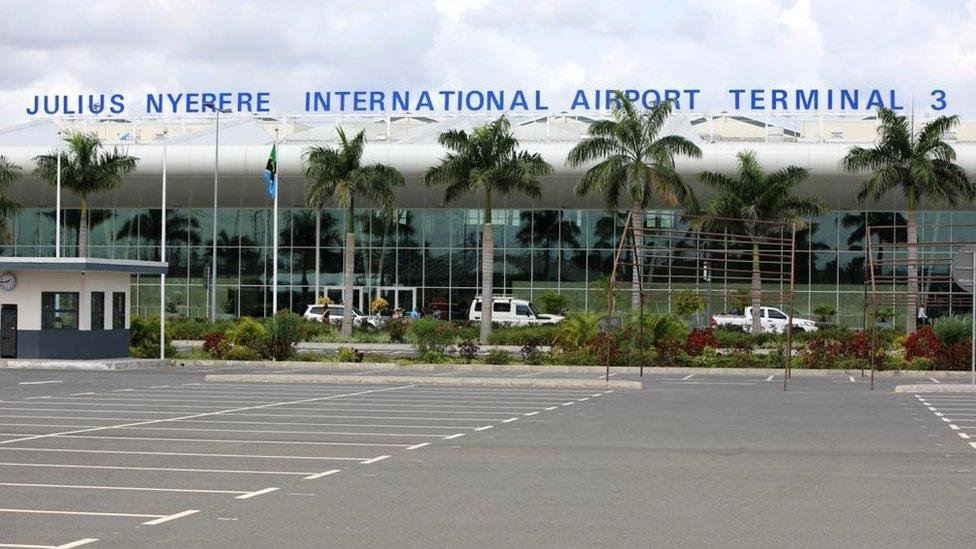
Julius Nyerere International Airport serves Dar es Salaam and is an important entry point for travellers visiting the city or planning certain southern Tanzania itineraries.
Depending on the route and available connections, DAR may also work for visitors continuing to Zanzibar.
Consider this airport if your plans include Dar es Salaam, selected southern safari destinations, or a journey that combines mainland Tanzania with the islands.
However, do not assume that DAR is automatically the best airport for a southern safari. The most suitable arrival point depends on the park, the available domestic flights, and the cost and duration of onward transport.
Abeid Amani Karume International Airport (ZNZ)

Zanzibar’s international airport is the principal airport for visitors flying directly to the island.
If your trip focuses on beaches, Stone Town, and island activities, arriving at ZNZ can eliminate an unnecessary transfer through mainland Tanzania.
After landing, you will need to arrange transport to your accommodation. The journey depends on whether you are staying in Stone Town or at a beach resort elsewhere on the island.
Our Zanzibar Travel Guide explains the main areas and experiences to consider when planning your stay.
What about Arusha Airport (ARK)?
Arusha Airport is different from Kilimanjaro International Airport.
Although both can be relevant to travellers visiting northern Tanzania, they are separate airports with different locations and services. Arusha Airport may be useful for certain domestic flights, while JRO is commonly considered for international arrivals.
Always check the three-letter airport code on your ticket and confirm which airport your driver or operator will meet you at.
Airport comparison at a glance
| Airport | Code | Often suitable for |
|---|---|---|
| Kilimanjaro International Airport | JRO | Northern safaris and Kilimanjaro climbs |
| Julius Nyerere International Airport | DAR | Dar es Salaam and selected southern itineraries |
| Abeid Amani Karume International Airport | ZNZ | Zanzibar holidays |
| Arusha Airport | ARK | Selected domestic and regional safari connections |
For current airport information, consult the Tanzania Airports Authority. Check the relevant airline’s timetable for actual flight availability.
3. Choosing the Right Airport for Your Itinerary
A useful approach is to plan backwards from your first major activity instead of choosing an airport before deciding where you want to go.
Scenario A: A northern Tanzania safari
Suppose your itinerary includes Tarangire, Ngorongoro, and Serengeti.
JRO is often a sensible airport to investigate first because it provides access to the northern Tanzania tourism region. From there, you can arrange transport to your hotel or agreed safari starting point.
If your safari includes a domestic flight to a remote airstrip, compare that option with the road itinerary proposed by your operator.
Scenario B: Climbing Kilimanjaro
For a Kilimanjaro climb, JRO is commonly a practical arrival airport.
You will need to coordinate your airport transfer with your climbing company and allow enough time for accommodation, equipment checks, and any pre-climb briefing.
Avoid scheduling a demanding activity immediately after a long international journey. A little extra time can help you arrive rested and ready for the climb.
Scenario C: Safari followed by Zanzibar
For a trip combining wildlife and beaches, you may arrive through JRO or DAR and continue to Zanzibar by air, depending on your safari route and available connections.
The most convenient option depends on where your safari ends. Compare the full itinerary, including the transfer to the departure airport, baggage requirements, and the time between flights.
Our Tanzania Safari and Zanzibar Itinerary offers ideas for combining these two experiences.
Scenario D: A Zanzibar-only holiday
If you are visiting Zanzibar without a mainland safari, compare flights to ZNZ first.
An alternative route through DAR may still be suitable if the schedule or total fare is better, but include the cost and time of the onward journey before deciding.
4. Getting from the Airport to Your Accommodation
Your arrival airport is only the beginning. You still need to reach your hotel, safari operator, climbing base, or beach resort.
The easiest approach is to arrange the transfer before departure, particularly when you have a pre-booked safari or mountain climb.
Airport transfers from JRO
Travellers arriving at JRO often continue by road to Arusha, Moshi, or accommodation elsewhere in the northern region.
The time required depends on your destination, traffic, and road conditions. Confirm the expected journey with your accommodation or operator rather than relying on a general estimate.
If your safari begins early the following morning, ask whether an overnight stay near the starting point would make the journey more comfortable.
Airport transfers from DAR
At DAR, your onward transport will depend on whether you are staying in Dar es Salaam, travelling overland, or connecting to another flight.
If you are continuing to a domestic flight, confirm the departure airport and terminal arrangements. Do not assume that every connection uses the same airport facilities or that a short connection will be practical.
Airport transfers from ZNZ
Your transfer from Zanzibar airport depends on where you are staying.
Stone Town, the northern beaches, the eastern coast, and the southern parts of the island are different destinations. Check the location of your accommodation and arrange transport accordingly.
What to confirm before arrival
Ask your hotel or operator to confirm:
- The driver’s name or identification arrangements.
- The meeting point at the airport.
- The contact number to use if you cannot find the driver.
- Whether the transfer is included in your package.
- What happens if your flight is delayed.
- Whether you need to pay separately for any onward transport.
Keep your confirmation and contact information accessible offline in case you cannot connect to the internet immediately after landing.
After arriving in Tanzania, arranging your airport transfer in advance can make the start of your trip much easier. Your transfer should match your arrival airport, accommodation and onward travel plans.
Make your arrival and onward journey easier to organise.
5. Domestic Flights and Safari Airstrips
Domestic flights can be useful when travelling between distant regions of Tanzania or reaching remote safari areas.
However, flying is not always necessary. For several parks in the same region, a road safari may be the more straightforward option.
When is a domestic flight worth considering?
Consider flying if:
- You have limited time and want to reduce long road transfers.
- Your itinerary includes distant or remote destinations.
- Suitable scheduled flights connect your destinations.
- The additional cost fits your budget.
- Your safari operator recommends a flight for the particular route.
Compare the total cost of flying with the cost of road transfers and any extra accommodation required.
Check baggage limits carefully
Flights operated by smaller aircraft may have stricter baggage restrictions than international airlines.
Before booking, confirm the operating airline’s current rules for:
- Maximum baggage weight.
- Permitted bag dimensions.
- Soft-sided luggage requirements, where applicable.
- Additional baggage charges.
- Any restrictions on particular items.
Do not assume that an international airline’s baggage allowance automatically applies to your domestic safari flight.
Leave a safe connection window
If your domestic flight is booked separately from your international flight, a delay could cause you to miss the connection.
You may need time for immigration, baggage collection, customs, check-in, and a transfer between airports. Allow sufficient time and consider an overnight stay when the connection is too tight.
A slightly longer itinerary is often preferable to risking an expensive missed flight or a disrupted safari.
6. Tanzania Visa and Entry Requirements
Before travelling, confirm whether you need a visa and which documents apply to your nationality.
The official Tanzania Electronic Visa Application System provides visa guidance, online applications, and a facility to check application status. The portal covers visits to mainland Tanzania and Zanzibar.
Do you need a visa for Tanzania?
Visa requirements vary according to nationality and travel circumstances.
The official guidance identifies different arrangements, including online applications, visa on arrival for eligible nationalities, and categories requiring advance approval. Therefore, you should not assume that a visa on arrival is available to everyone.
Start by checking the official guidance for your passport. If you need advance approval, obtain it before travelling.
Official resource: Apply for a Tanzania eVisa.
How long does the Tanzania eVisa application take?
The published visa guidelines state that online applications are generally processed within ten days, except for referral cases. This is a processing guideline, not a guarantee that every application will be approved within that period.
Apply well before your departure date, especially if your application requires additional review or documentation.
Avoid making non-refundable reservations before approval if the official guidance for your nationality advises you to wait.
What documents are required?
The official guidelines list the following key requirements for visa applicants and visitors, subject to the relevant visa category:
- A passport valid for at least six months.
- At least one unused visa page.
- A return ticket to be shown upon arrival.
- The correct visa application type and supporting documentation, where required.
Requirements can vary by visa category, and the immigration authority may request additional information. Review the current official checklist before submitting your application.
What is a referral visa?
Certain nationalities and applicant categories are subject to a referral process and cannot simply rely on the standard visa-on-arrival procedure.
The official guidance advises applicants in this category to apply online and wait for approval before beginning their journey. It also recommends applying at least two months before travel.
Check the current referral list and instructions on the official immigration website because the applicable rules may change.
Does one visa cover mainland Tanzania and Zanzibar?
The official eVisa portal provides applications for the United Republic of Tanzania, including mainland Tanzania and Zanzibar. Its guidance states that visitors planning to visit both should indicate their first destination when completing the application and may visit both without obtaining a new visa solely for that reason.
However, other requirements may apply to your trip. Check current official guidance for your nationality and the specific places you intend to visit.
Is a visa approval notice a guarantee of entry?
No. The official guidelines explain that a visa grant notice does not constitute final permission to enter the country. The immigration officer at the point of entry retains authority to assess whether the traveller meets the entry requirements.
Make sure your documents are accurate, your travel purpose matches the visa category, and you can provide any required supporting information.
Avoid unofficial visa websites
Use the official Tanzania Immigration Services platform rather than an unfamiliar third-party website that may charge extra fees or provide outdated information.
For questions about a particular application, follow the contact instructions on the official immigration website.
7. What to Expect When You Arrive
Knowing what happens after landing can make your first hours in Tanzania less stressful.
The precise procedure varies by airport and individual circumstances, but the following sequence is a useful preparation guide.
Step 1: Complete immigration formalities
Follow the signs for arriving passengers and present your passport, visa documents where applicable, and any other documents requested by the authorities.
Answer questions accurately and keep your supporting documents available.
Step 2: Collect your baggage
After immigration, collect your checked luggage and follow the airport’s customs procedures.
If your baggage is missing, report it to the airline before leaving the airport and keep the reference number.
Step 3: Meet your driver
Follow the meeting instructions provided by your hotel or operator.
If you cannot locate your driver, contact the company using the number in your booking confirmation rather than accepting an unverified alternative arrangement.
Step 4: Arrange practical essentials
Depending on your needs, you may wish to arrange mobile connectivity, local currency, or transport.
Check the availability and opening hours of airport services in advance if you intend to rely on them. Keep your accommodation details and important contacts accessible even without an internet connection.
Step 5: Allow time to rest
A long international flight can leave you tired, and your transfer may still take several hours.
If you are starting a safari or climbing Kilimanjaro, plan your arrival around the actual schedule of your first activity. For Zanzibar, consider the distance between the airport and your accommodation.
A realistic first-day plan can make the rest of your holiday more enjoyable.
8. Common Mistakes to Avoid
Several common errors can create unnecessary expense or disruption.
Choosing an airport based only on price. A cheap flight may require expensive transfers or additional accommodation. Compare the total journey.
Confusing JRO and ARK. These are separate airports. Check the airport code on your ticket and transfer confirmation.
Assuming every nationality can get a visa on arrival. Eligibility varies. Use the official immigration guidance before travelling.
Booking separate flights with too little connection time. Delays can cause you to miss a separately booked flight. Allow a sensible buffer.
Ignoring baggage rules on small aircraft. Check the domestic airline’s baggage allowance before packing.
Assuming airport transfers are included. Confirm exactly what your safari package or accommodation covers.
Planning too much on arrival day. Allow for immigration, baggage collection, transport, and recovery after your flight.
9. Your Pre-Departure Checklist
Before you leave home, confirm the following:
- Your arrival airport matches your first destination.
- Your international flights and connections are confirmed.
- Your passport meets the current validity requirements.
- You have checked visa eligibility and obtained any required approval.
- Your return or onward ticket is accessible.
- Your hotel or operator has confirmed the airport transfer.
- You know where to meet your driver.
- You have checked domestic-flight baggage restrictions, if applicable.
- Your accommodation and contact details are saved offline.
- You have allowed sufficient time for transfers and your first activity.
10. Plan Your Arrival with Nomadic Routes
Getting to Tanzania is easier when your flights, transfers, accommodation, and first activity are planned together.
The right arrangement depends on whether you are visiting the northern safari circuit, climbing Kilimanjaro, exploring southern Tanzania, or combining wildlife with Zanzibar’s beaches.
If you are organising a safari or a combined Tanzania holiday, Nomadic Routes can help you explore itinerary options and coordinate your trip with its local operating team.
Ready to plan your Tanzania adventure?
Tell us your travel dates, the places you want to visit, and the kind of experience you are looking for. Start planning a trip that fits your schedule and priorities.
Frequently Asked Questions
What is the best airport to fly into for Tanzania?
JRO is often convenient for northern safaris and Kilimanjaro climbs, DAR serves Dar es Salaam and can suit some southern itineraries, and ZNZ is the main airport for Zanzibar. Your best option depends on your full itinerary and flight availability.
Can I fly directly to Zanzibar?
Direct international flights may be available from selected departure cities and on certain dates. Check the schedule for your travel dates and compare the full cost with connecting options.
Is Kilimanjaro Airport the same as Arusha Airport?
No. Kilimanjaro International Airport is JRO, while Arusha Airport is ARK. They are separate airports, so verify the code on your booking.
Can I travel between mainland Tanzania and Zanzibar on the same visa?
The official Tanzania eVisa guidance states that a visitor planning to visit both mainland Tanzania and Zanzibar can do so without obtaining a new visa solely for the change of destination, subject to the applicable visa conditions. Verify the current requirements for your nationality on the official eVisa portal.
How early should I apply for a Tanzania visa?
Apply well before departure. The published guidelines state that ordinary online applications are generally processed within ten days, while referral cases may take longer and are advised to apply at least two months before travel. Processing times are not guarantees, so follow the current instructions for your application.
Should I arrange an airport transfer in advance?
For a pre-booked safari, climbing trip, or hotel stay, confirming the transfer in advance is usually the most straightforward option. Ask for the meeting point, contact details, and arrangements for flight delays.
Is it better to fly or travel by road between safari destinations?
That depends on the distance, the parks you intend to visit, the time available, and your budget. Domestic flights can save travel time on some routes, while road transfers may work well for parks in the same region.