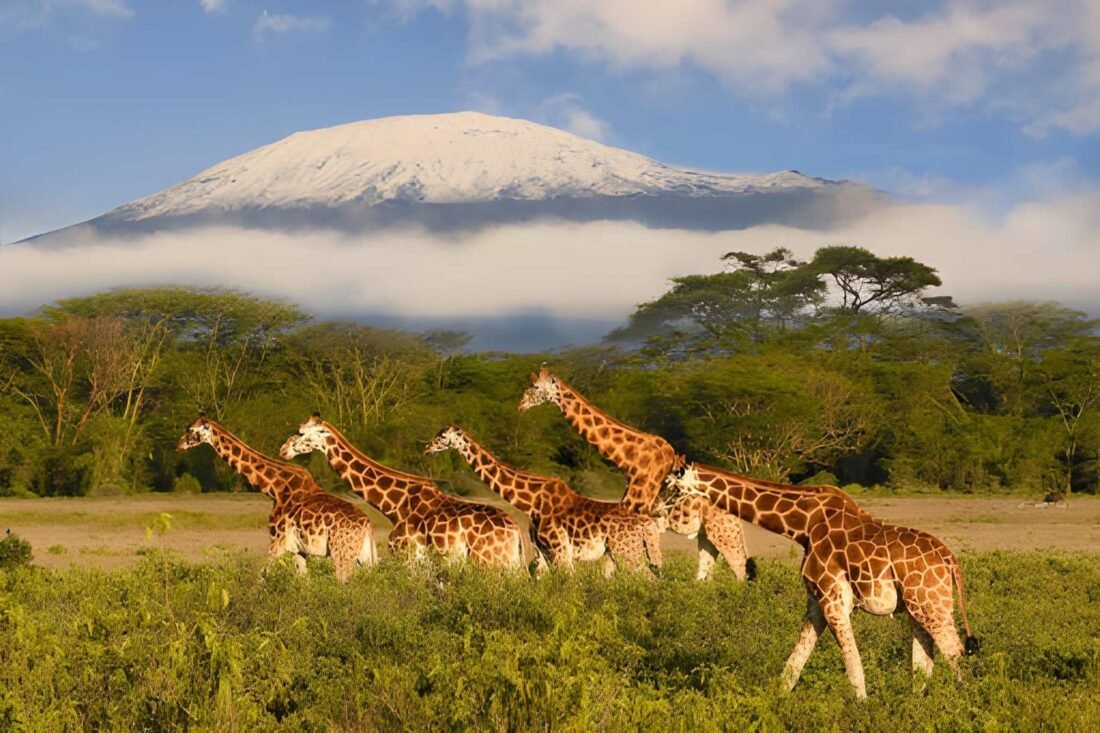
Combining a Tanzania safari and Kilimanjaro climb gives you the chance to experience two very different sides of Tanzania on the same trip.
One part of the journey takes you into the mountains.
You hike through forests, alpine landscapes and high-altitude terrain before attempting the summit of Mount Kilimanjaro, Africa’s highest mountain at 5,895 meters (19,341 feet).
The other takes you into Tanzania’s famous wildlife areas.
You can explore the plains of the Serengeti, visit the Ngorongoro Crater and search for elephants among the baobabs of Tarangire. These destinations form part of Tanzania’s iconic Northern Safari Circuit.
The combination sounds simple.
In practice, however, good planning matters.
You need to choose the right Kilimanjaro route, allow enough time for the climb, plan your recovery, and select safari destinations that fit your remaining days.
This guide explains how to combine Kilimanjaro and a Tanzania safari, how much time you need, which order makes sense, which parks work best, and how to build an itinerary that feels enjoyable rather than rushed.
Why Combine Kilimanjaro and Safari in Tanzania?
Tanzania is particularly well suited to this type of trip because mountain trekking and safari can be combined within a Northern Tanzania itinerary.
The official Tanzania Tourism Board lists Kilimanjaro, Serengeti, Ngorongoro and Tarangire among the country’s major travel experiences.
That creates an unusual contrast.
On Kilimanjaro, your days revolve around walking, altitude and the mountain environment.
On safari, the rhythm changes completely.
You can sit in a 4×4 vehicle, watch wildlife and move through large protected landscapes without the physical effort of a mountain climb.
Kilimanjaro gives you the adventure
A Kilimanjaro climb offers:
- Multi-day trekking
- High-altitude mountain scenery
- Different ecological zones
- A demanding physical challenge
- The opportunity to attempt Africa’s highest summit
Kilimanjaro has several established trekking routes, including Marangu, Machame and Lemosho.
Safari gives you the wildlife experience
A Northern Tanzania safari can add:
- Serengeti wildlife
- Ngorongoro’s dramatic crater landscape
- Tarangire’s elephants and baobabs
- Game drives
- Photography opportunities
- Comfortable lodges or safari camps
The official tourism board describes Serengeti as one of Tanzania’s signature wildlife destinations, while Ngorongoro and Tarangire are also key parts of the Northern Circuit.
Together, the two experiences create a much more varied Tanzania journey.
What Makes This Combination Different?
A safari and Kilimanjaro trip is not simply two holidays joined together.
The experiences complement each other.
First, there is the physical challenge.
You spend several days focused on reaching the summit.
Then comes the change of pace.
After the mountain, you can slow down and enjoy game drives.
Finally, you can add relaxation.
If your schedule allows, Zanzibar can follow the safari and turn the trip into a mountain → safari → beach journey.
That progression can work particularly well for travelers who want adventure without spending their entire holiday doing physically demanding activities.
Kilimanjaro or Safari First?
One of the first decisions is the order of the trip.
For many travelers, I recommend:
Kilimanjaro → recovery → safari
There is a simple reason.
Kilimanjaro is the physically demanding part.
Starting the climb while you are rested gives you a better chance of approaching the trek with enough energy and focus.
After the mountain, the safari provides a more relaxed transition.
You can spend the next few days sitting in a safari vehicle rather than climbing steep trails.
Why Climb Kilimanjaro Before Safari?
There are several practical advantages.
You start the climb fresh
Long safari drives can be tiring.
Early game drives can also mean very early mornings.
It is generally more sensible to protect your energy for the mountain if Kilimanjaro is one of the main goals of your trip.
You avoid rushing to the mountain
If safari comes first, a delayed transfer or change in your safari schedule could create unnecessary pressure before your climb.
Safari becomes your recovery experience
After reaching the summit, you can switch from trekking boots to a safari vehicle.
That contrast can make the second half of the trip feel much easier.
Can You Do Safari Before Kilimanjaro?
Yes.
There is no universal rule that says Kilimanjaro must come first.
Some travelers prefer to start with safari.
This can work well if the safari is the main purpose of the trip and Kilimanjaro is an additional adventure.
However, if reaching Uhuru Peak is your primary goal, I would generally prioritize the mountain first.
The most important thing is to understand your priorities before deciding the order.
How Many Days Do You Need for Kilimanjaro and Safari?
This is one of the most important planning questions.
There is no single perfect number.
Your ideal trip depends on:
- Kilimanjaro route
- Number of trekking days
- Safari destinations
- Travel time
- Recovery time
- Whether you want Zanzibar
- International flight schedule
Trying to squeeze both experiences into too few days can create an exhausting itinerary.
A longer trip gives you more flexibility.
A Short Combination Trip
A short trip can technically include both experiences.
However, the problem is that something has to be sacrificed.
If you spend most of your time climbing Kilimanjaro, you may have only a day or two for safari.
That is enough to experience a safari.
It is not enough to explore Northern Tanzania deeply.
For travelers who want both experiences to feel meaningful, I recommend allowing more time whenever possible.
A More Balanced Approach
A useful way to think about the trip is:
Kilimanjaro + recovery + safari
rather than:
Kilimanjaro + safari immediately
That recovery period matters.
After several days of trekking and a summit attempt, your body deserves time to rest.
It also gives your itinerary some flexibility.
If the mountain schedule changes because of weather or other conditions, you have more room to adjust the rest of your trip.
How Long Should the Kilimanjaro Climb Be?
The answer depends on the route.
Kilimanjaro has several trekking routes, and they do not all use the same number of days.
The important point is not simply choosing the shortest itinerary.
Altitude is a major part of the challenge.
Kilimanjaro reaches 5,895 meters, so acclimatization should be an important consideration when choosing your route and schedule.
A longer itinerary can provide more time on the mountain.
That can make a significant difference to the overall trekking experience.
If you are deciding between routes, our Machame vs Lemosho Route guide can help you compare two of the popular options.
What Should You Expect From the Kilimanjaro Part?
A Kilimanjaro climb is not simply a long hike.
You move through different environments as you gain altitude.
The mountain includes several major volcanic features and ecological zones, with Kibo forming the highest summit area. Tanzania’s official tourism information identifies Kilimanjaro’s three volcanic cones as Kibo, Mawenzi and Shira.
The experience changes as you climb.
Lower elevations can feel relatively warm and green.
Higher elevations become colder and more exposed.
The summit attempt is therefore a completely different experience from the first days of the trek.
What Happens After Kilimanjaro?
After completing the climb, I recommend allowing time to recover before beginning a demanding safari.
You do not necessarily need several days.
Even a well-planned recovery day can make the transition much more comfortable.
A simple structure is:
Summit → descent → hotel → recovery → safari
That gives you time to:
- Sleep properly
- Shower and rest
- Eat a proper meal
- Reorganize your luggage
- Recover your legs
- Prepare for the safari
The goal is not to waste a day.
The goal is to make the next part of your trip more enjoyable.
Which Safari Parks Work Best After Kilimanjaro?
For most travelers combining the two experiences, the Northern Safari Circuit is the most logical choice.
The official Tanzania Tourism Board identifies Serengeti, Ngorongoro and Tarangire as major Northern Circuit destinations.
The best combination depends on how many safari days you have.
Tarangire National Park
Tarangire can work particularly well when you have limited safari time.
The park is known for its elephant herds and distinctive baobab landscapes.
That makes it an attractive first safari destination after a Kilimanjaro climb.
You can experience a very different landscape without needing to build an extremely long safari itinerary.
Cratère de Ngorongoro
Ngorongoro adds another type of landscape to the trip.
Instead of the open plains of the Serengeti, you experience a dramatic crater environment.
The Tanzania Tourism Board describes Ngorongoro as a major wildlife destination and highlights its concentration of wildlife within the crater.
It is therefore a natural addition to a short or medium-length Northern Circuit safari.
You can read our detailed Ngorongoro Crater Safari Guide for more information.
Serengeti National Park
Serengeti is the obvious choice if wildlife is one of the main reasons you are visiting Tanzania.
The park is famous for the annual movement of wildebeest and zebra and its large predator populations.
However, Serengeti is also larger and farther from some of the other Northern Circuit destinations.
That means you should give it enough time.
Adding Serengeti for one rushed day simply because it is famous may not be the best use of your itinerary.
If you want to understand how to plan your Serengeti experience, see our Serengeti National Park Safari Guide.
How Many Safari Days Should You Add?
A useful rule is:
1–2 safari days
Choose a compact itinerary.
Tarangire + Ngorongoro can be a sensible combination.
3 safari days
You have more flexibility.
You can consider:
Tarangire → Ngorongoro → Serengeti
or spend more time in fewer destinations.
4–5 safari days
This is where the trip becomes much more comfortable.
You can spend meaningful time in the Serengeti instead of constantly moving between parks.
That is often better for travelers who care about wildlife quality rather than simply collecting destinations.
Should You Add Zanzibar After Kilimanjaro and Safari?
If you have enough time, absolutely consider it.
The overall journey becomes:
Kilimanjaro → Safari → Zanzibar
This creates three completely different experiences.
Kilimanjaro
Adventure and physical challenge.
Safari
Wildlife and wilderness.
Zanzibar
Beach, culture and relaxation.
The official Tanzania Tourism Board presents Zanzibar as part of the country’s major beach and island experiences, making it a natural extension after a mainland itinerary.
For travelers with enough vacation time, this can become a complete Tanzania journey rather than a single-purpose trip.
Internal Link: Plan the Full Trip
If you are still deciding how many days to spend in Tanzania, our Tanzania Travel Planning Guide is the logical next article to read.
It can help you connect the mountain, safari and other parts of your trip before deciding on the final itinerary.
Part 2 — How to Build the Perfect Tanzania Safari and Kilimanjaro Itinerary
Once you decide to combine Kilimanjaro and a Tanzania safari, the next question is how to fit both experiences into one trip without making the itinerary too rushed.
There is no single perfect itinerary for everyone.
The right combination depends on how many days you have, which Kilimanjaro route you choose, how much time you want to spend on safari, and whether you also want to visit Zanzibar.
The examples below are starting points rather than fixed packages. Your final itinerary should be adjusted around your flights, trekking route, travel dates and priorities.
10-Day Tanzania Safari and Kilimanjaro Itinerary
A 10-day trip is possible, but it is the most compressed option.
A typical structure could look like this:
| Day | Experience |
|---|---|
| Day 1 | Arrival in Tanzania |
| Days 2–7 | Kilimanjaro climb |
| Day 8 | Descent and recovery |
| Day 9 | Safari |
| Day 10 | Safari or departure |
The main advantage is that you can experience both Kilimanjaro and safari within a relatively short vacation.
The disadvantage is time.
A single safari day gives you only a brief introduction to Tanzania’s wildlife.
For travelers who consider both experiences equally important, I would usually recommend adding several more days if possible.
Who is a 10-day itinerary best for?
This option may suit travelers who:
- Have limited vacation time.
- Prioritize Kilimanjaro.
- Want a short safari experience.
- Are willing to accept a fast-paced itinerary.
If safari is one of your main reasons for visiting Tanzania, a longer trip is usually a better choice.
12-Day Tanzania Safari and Kilimanjaro Itinerary
Twelve days gives you more breathing room.
One possible structure is:
| Day | Experience |
|---|---|
| Day 1 | Arrival |
| Day 2 | Preparation and transfer |
| Days 3–8 | Kilimanjaro climb |
| Day 9 | Recovery |
| Days 10–12 | Northern Tanzania safari |
This structure gives you a more meaningful safari experience after the mountain.
You can focus on a compact combination of parks rather than trying to cover the entire Northern Circuit.
For example:
Kilimanjaro → recovery → Tarangire → Ngorongoro
This can work particularly well when your priority is to experience both the mountain and wildlife without extending the trip too far.
14-Day Tanzania Safari and Kilimanjaro Itinerary
If you have two weeks, the trip becomes much easier to balance.
A possible itinerary is:
| Day | Experience |
|---|---|
| Day 1 | Arrival in Tanzania |
| Day 2 | Preparation |
| Days 3–9 | Kilimanjaro |
| Day 10 | Recovery |
| Days 11–13 | Safari |
| Day 14 | Departure |
The exact number of trekking days depends on your chosen Kilimanjaro route.
The safari portion could focus on:
- Tarangire
- Ngorongoro
- Serengeti
However, you do not necessarily need all three.
If Serengeti is a priority, it can be better to spend more time there rather than rushing through several parks.
For more information about the different safari durations, see our guide to 5-Day vs 7-Day vs 10-Day Tanzania Safaris.
Why 14 days is a strong option
Two weeks gives you room for:
- A proper Kilimanjaro climb.
- A recovery period.
- Several safari days.
- More flexible transfers.
- Less pressure if plans change.
For travelers who want both Kilimanjaro and safari to be major parts of the trip, this is one of the most practical trip lengths.
16–18 Day Tanzania Itinerary: Kilimanjaro, Safari and Zanzibar
If you have more time, you can add Zanzibar without turning the trip into a race.
A natural structure is:
Kilimanjaro → Recovery → Safari → Zanzibar
For example:
| Stage | Approximate time |
|---|---|
| Kilimanjaro | 7–9 days |
| Recovery | 1 day |
| Safari | 4–5 days |
| Zanzibar | 3–4 days |
The exact number of days depends on your route and travel schedule.
This type of itinerary gives each part of the trip a different purpose.
Kilimanjaro is the challenge.
Safari is the wildlife experience.
Zanzibar is the opportunity to slow down and relax.
If you want a more detailed look at combining safari and Zanzibar, continue with our Tanzania Safari and Zanzibar Itinerary.
Kilimanjaro, Safari and Zanzibar: Which Order Is Best?
If you want all three experiences, I generally prefer:
Kilimanjaro → Safari → Zanzibar
There is a simple logic behind this order.
You tackle the most physically demanding part first.
Then you move into a more relaxed wildlife experience.
Finally, you finish beside the Indian Ocean.
This creates a natural progression:
Adventure → Wildlife → Relaxation
It also avoids ending your holiday with a demanding mountain climb after spending several days on safari and traveling between destinations.
What about Safari → Kilimanjaro → Zanzibar?
This can also work.
It may appeal to travelers who want to begin with a relaxed safari before taking on the mountain.
However, if reaching the summit is one of your main goals, you should consider whether you want to arrive at Kilimanjaro after several days of travel and early-morning game drives.
There is no universal rule.
Your priorities should determine the order.
Which Kilimanjaro Route Works Best With a Safari?
The best route depends on more than the number of days available.
You should consider:
- Acclimatization
- Trekking experience
- Fitness
- Paysage
- Budget
- Number of days
- How much time you want to leave for safari
A shorter route may appear attractive because it leaves more time for wildlife.
But saving a day on the mountain is not necessarily the best strategy if it compromises the overall trekking experience.
route de Machame
Machame is a popular option for travelers who want a scenic trekking experience and have enough time for a multi-day climb.
Lemosho Route
Lemosho offers a longer approach and is often considered when travelers want more time on the mountain.
Marangu Route
Marangu is different because overnight accommodation is provided in mountain huts rather than tents.
The best route is therefore not simply the one that fits the most activities into the fewest days.
If you are deciding specifically between Machame and Lemosho, see our Machame vs Lemosho Route guide.
Best Safari Combinations After Kilimanjaro
Once you finish Kilimanjaro, you do not need to visit every famous park.
Choose the combination that matches your available time.
Kilimanjaro + Tarangire + Ngorongoro
This is a strong option when you have only a few safari days.
Tarangire gives you a different landscape and is particularly known for elephants and baobabs.
Ngorongoro then adds the dramatic crater environment and concentrated wildlife experience.
This combination can work well when you want a compact Northern Tanzania safari.
Kilimanjaro + Ngorongoro + Serengeti
Choose this combination if wildlife is one of your biggest priorities.
Ngorongoro and Serengeti offer very different environments.
The Serengeti is much larger, so it is worth giving it enough time rather than treating it as a quick stop.
If Serengeti is the main reason you are adding safari to your Kilimanjaro trip, consider allocating several days to the park.
Our Serengeti National Park Safari Guide goes into much greater detail about the park, wildlife and planning considerations.
Kilimanjaro + Tarangire + Ngorongoro + Serengeti
This is the more ambitious option.
It can work very well on a longer trip, but it should not be forced into a short itinerary.
Every additional destination creates another transfer.
More destinations do not automatically mean a better safari.
Sometimes spending an additional night in one park gives you a better experience than adding another park to the itinerary.
How Much Time Should You Spend in the Serengeti?
If Serengeti is on your itinerary, do not think of it as just another checkbox.
The park is enormous.
Wildlife movements also vary by location and season.
That means the number of days you need depends on what you want to see and where you plan to stay.
If you have only one safari day after Kilimanjaro, I would question whether Serengeti is the best choice.
A shorter-distance safari can make more sense.
If you have several safari days, however, Serengeti becomes much easier to justify.
This is one reason why adding more days to your Tanzania trip can significantly improve the overall experience.
Recovery Between Kilimanjaro and Safari
Do not underestimate the transition between the two experiences.
Finishing Kilimanjaro does not mean you are immediately ready for a long safari day.
You may have spent several days walking at altitude, waking early and sleeping in mountain camps.
A recovery day gives you time to:
- Sleep properly.
- Shower and relax.
- Eat well.
- Reorganize your luggage.
- Recover your legs.
- Prepare mentally for safari.
Your recovery day does not need to be complicated.
In many cases, a comfortable hotel, a good meal and a quiet day are exactly what you need.
If you are considering what to do after the mountain, our Zanzibar After Climbing Kilimanjaro guide can also help if you plan to continue to Zanzibar.
How Much Does a Kilimanjaro and Safari Trip Cost?
There is no single price for a Tanzania Safari and Kilimanjaro combination.
The final cost depends on how the trip is organized.
Kilimanjaro costs may include:
- Park fees
- Mountain fees
- Accommodation on the route
- Guide
- Porters
- Meals
- Transfers
- Accommodation before and after the climb
- Operator services
Safari costs may include:
- Park entrance fees
- Safari vehicle
- Professional guide
- Accommodation
- Meals
- Game drives
- Transfers
- Operator services
This is why you should not compare two packages based only on the headline price.
One quotation may include airport transfers, park fees and accommodation.
Another may exclude several of those items.
TANAPA fees are not the final trip price
This distinction is particularly important when researching Kilimanjaro.
Official park tariffs are only one component of the overall trip cost.
Your quotation should clearly show what is included and what you will pay separately.
For a more detailed look at safari pricing, see our Tanzania Safari Cost guide.
For Kilimanjaro specifically, see our Kilimanjaro Climb Cost guide.
What Should Be Included in Your Combined Trip Quote?
Before paying a deposit, ask for an itemized quotation.
For Kilimanjaro
Check whether the price includes:
- Park and mountain fees
- Guide
- Porters
- Meals
- Mountain accommodation
- Transfers
- Pre- and post-climb accommodation
- Rescue-related charges where applicable
For safari
Check whether it includes:
- Park fees
- Safari vehicle
- Driver-guide
- Accommodation
- Meals
- Game drives
- Transfers
- Taxes and other mandatory charges where applicable
Then check the exclusions.
Common exclusions can include international flights, visas, travel insurance, tips, drinks and personal expenses.
The important thing is not whether something is included or excluded.
The important thing is that you know before booking.
What Should You Pack for Both Kilimanjaro and Safari?
Packing for this combination can seem complicated because the two experiences require different clothing.
The easiest approach is to divide your luggage into two categories.
Kilimanjaro essentials
Depending on your route and operator, you may need:
- Hiking boots
- Trekking trousers
- Moisture-wicking base layers
- Couches chaudes
- Waterproof jacket
- Gloves
- Warm hat
- Headlamp
- Sunglasses
- Sunscreen
- Water bottles or hydration system
- Trekking poles
- Personal medication
Your operator should provide a route-specific packing list.
For a detailed checklist, see our Kilimanjaro Packing List.
Safari essentials
For the safari portion, consider:
- Lightweight clothing
- Comfortable shoes
- Hat
- Sunglasses
- Sunscreen
- Insect repellent
- Camera
- Binoculars
- Power bank
- Reusable water bottle
- A light jacket or warmer layer
Our Tanzania Safari Packing List covers the safari side in more detail.
One useful packing strategy
You do not need to carry everything with you during the mountain climb.
Ask your operator about luggage storage.
You can usually organize your belongings so that you carry only the equipment needed for the mountain while keeping your safari clothes and other items safely stored.
Who Should Combine Kilimanjaro and Safari?
This combination is particularly attractive if you:
- Want an active adventure.
- Love wildlife.
- Have enough vacation time.
- Want to experience different sides of Tanzania.
- Enjoy varied travel experiences.
- Are comfortable with a physically demanding first part of the trip.
It can also work particularly well for couples who want a combination of adventure and relaxation.
Who Should Not Combine Both?
Combining everything is not automatically better.
A safari-only trip may make more sense if:
- You dislike strenuous trekking.
- You have limited vacation time.
- Wildlife is your only priority.
- You want a slower holiday.
- You do not want to deal with altitude or mountain preparation.
Likewise, if Kilimanjaro is your only major goal and you have very limited time, adding a safari may make the itinerary unnecessarily complicated.
The best Tanzania trip is not the one with the most activities.
It is the one that fits your priorities and available time.
Common Mistakes When Combining Kilimanjaro and Safari
Trying to fit everything into too few days
More destinations do not necessarily mean a better trip.
Choosing a Kilimanjaro route only because it is shorter
The mountain deserves proper planning.
Scheduling a long safari immediately after the climb
A recovery period can make the transition much more comfortable.
Adding Serengeti without enough time
A famous destination is not automatically a good destination for a rushed itinerary.
Comparing packages only by price
Always compare inclusions and exclusions.
Forgetting the travel time between destinations
An itinerary that looks perfect on paper can become exhausting once transfers are added.
Leaving Zanzibar until the last minute
If you want to add Zanzibar, build it into the itinerary from the beginning.
For a detailed guide to combining safari and Zanzibar, see Tanzania Safari and Zanzibar Itinerary.
The Best Way to Build Your Tanzania Trip
Rather than starting with a list of places, start with the experience you want.
Ask yourself:
How important is Kilimanjaro?
How important is safari?
Do I want Zanzibar?
How many days can I travel?
Do I prefer adventure, wildlife or relaxation?
Once you answer those questions, the itinerary becomes much easier to build.
For example:
10 days: Kilimanjaro + short safari
12 days: Kilimanjaro + compact Northern Circuit safari
14 days: Kilimanjaro + meaningful safari
16–18 days: Kilimanjaro + safari + Zanzibar
These are planning frameworks, not fixed rules.
Your route, travel dates and priorities should determine the final itinerary.
Part 3 — Planning, Timing & Booking Your Tanzania Adventure
Combining Kilimanjaro and a Tanzania safari requires more than choosing two activities and putting them on the same calendar.
The timing of your trip, the season, your recovery time, insurance, luggage and transfers can all affect the experience.
If you also want to add Zanzibar, the planning becomes even more important.
The goal is simple: build a trip that feels connected, not rushed.
Best Time to Combine Kilimanjaro and Safari
There is no single month that is perfect for every traveler.
You are planning two different experiences, so you need to consider both mountain conditions and safari priorities.
Your ideal travel period can also depend on whether you want to add Zanzibar.
For a broader seasonal comparison, see our Best Time to Visit Tanzania for Safari, Kilimanjaro & Zanzibar.
January to March
This period can work well for travelers who want to combine a mountain climb with a Northern Tanzania safari.
It can also be an attractive period for travelers interested in the wildlife experience around the Serengeti and Ngorongoro.
However, conditions vary by location and date, so your exact itinerary should be planned around your priorities.
June to October
This is one of the most popular periods for Tanzania travel.
It can work particularly well for travelers who want to combine Kilimanjaro with a safari.
Dry-season conditions can make wildlife viewing attractive, while the mountain can be incorporated into a longer Northern Tanzania itinerary.
Because this is a popular travel period, accommodation and trekking arrangements should be planned in advance.
November to December
The shorter rains can affect travel conditions.
That does not mean you cannot combine Kilimanjaro and safari during this period.
It simply means you should understand the seasonal conditions and build some flexibility into your itinerary.
Preparing for Your Kilimanjaro Climb
The mountain portion of your trip deserves serious preparation.
Kilimanjaro is not a technical climbing expedition in the traditional mountaineering sense, but reaching 5,895 meters (19,341 feet) is still a significant physical challenge.
Your preparation should focus on endurance, walking and being comfortable spending several consecutive days on the mountain.
Build your endurance
Regular walking and hiking can help you prepare for long trekking days.
If possible, include longer walks in your preparation rather than relying only on short workouts.
Practice with your trekking equipment
Do not wait until Tanzania to discover that your boots are uncomfortable or your backpack does not fit properly.
Break in your hiking boots before the trip.
Test the clothing layers you intend to use.
Make sure you know how to use your headlamp, trekking poles and hydration system.
Prepare for changing temperatures
Kilimanjaro takes you through different environments.
Lower sections can feel relatively warm, while higher elevations can be cold and exposed.
Layering is therefore more practical than relying on one heavy piece of clothing.
For the complete equipment checklist, see our Kilimanjaro Packing List.
Altitude and Acclimatization on Kilimanjaro
Altitude is one of the most important differences between Kilimanjaro and safari.
A safari does not expose you to the same high-altitude environment.
On Kilimanjaro, however, your body has to adapt as you ascend.
This is why the number of trekking days matters.
A route should not be selected simply because it is the shortest or cheapest option.
Your itinerary should give you an appropriate opportunity to acclimatize.
If you develop symptoms that concern you during the climb, follow the instructions of your qualified mountain team. Do not treat reaching the summit as more important than your safety.
For a detailed explanation of altitude-related risks, see our Acute Mountain Sickness on Kilimanjaro guide.
Travel Insurance for Kilimanjaro and Safari
Travel insurance should be considered before you book the trip.
Do not assume that a standard travel policy automatically covers every activity you plan to undertake.
Before purchasing insurance, check whether your policy covers:
- Trekking at the altitude of your planned climb
- Emergency medical treatment
- Emergency evacuation
- Trip interruption or cancellation where applicable
- Baggage and personal belongings
- Safari-related emergencies
The exact coverage depends on the policy.
Read the exclusions carefully, particularly those related to altitude and adventure activities.
Preparing for the Transition From Kilimanjaro to Safari
The transition between the mountain and safari should be part of the itinerary from the beginning.
You will have just spent several days trekking.
You should not plan the first safari day as if you were arriving in Tanzania fresh from the airport.
A better sequence is:
Kilimanjaro → descent → recovery → safari
Your recovery day can be simple.
You may want to:
- Sleep longer
- Take a proper shower
- Eat a full meal
- Rest your legs
- Organize your luggage
- Charge your electronics
- Prepare your camera equipment
- Get ready for the safari
This small buffer can make the entire trip feel more comfortable.
What to Do With Your Luggage
Packing for both Kilimanjaro and safari can create an unnecessary problem if you carry everything up the mountain.
Ask your operator in advance about luggage storage during the trek.
You can then separate your belongings into:
Mountain luggage
Only the clothing and equipment required for Kilimanjaro.
Safari luggage
Your lighter clothing, camera equipment and other items needed after the climb.
This makes the mountain portion easier and keeps your safari equipment organized.
For your safari-specific packing list, see our Tanzania Safari Packing List.
What If You Want to Add Zanzibar?
If you have enough time, adding Zanzibar can turn your trip into a three-part Tanzania experience:
Kilimanjaro → Safari → Zanzibar
This is one of the most natural ways to structure a longer trip.
You begin with the most physically demanding experience.
Then you move into wildlife and game drives.
Finally, you slow down on the coast.
But do not add Zanzibar by simply squeezing two nights into an already crowded itinerary.
Give yourself enough time to enjoy the island.
For a complete guide to combining safari and Zanzibar, see our Tanzania Safari and Zanzibar Itinerary.
If you are specifically interested in continuing to Zanzibar after your mountain climb, our Zanzibar After Climbing Kilimanjaro guide covers that scenario in more detail.
How Many Days Should You Spend in Zanzibar?
There is no fixed number that works for everyone.
2–3 days
A short beach extension can work if your main priorities are Kilimanjaro and safari.
3–4 days
This gives you more time to slow down and explore.
Longer stays
If Zanzibar is one of the main reasons for your Tanzania trip, staying longer makes sense.
The key is not to sacrifice a good safari or mountain itinerary simply to add Zanzibar.
If you have limited vacation time, decide which experience matters most before adding another destination.
Choosing Between a Short and Long Tanzania Trip
Your available time should shape the itinerary.
Choose 10–12 days if:
- Kilimanjaro is your main priority.
- You have limited vacation time.
- You only need a short safari.
- You do not plan to add Zanzibar.
Choose around 14 days if:
- You want a balanced mountain and safari experience.
- You want several safari days.
- You want more flexibility between activities.
Choose 16–18 days or more if:
- You want Kilimanjaro.
- You want a meaningful safari.
- You also want Zanzibar.
- You prefer a slower pace.
There is no prize for fitting the most destinations into the shortest holiday.
A well-paced 14-day trip can be better than an exhausting 18-day itinerary packed with constant transfers.
How to Book a Tanzania Safari and Kilimanjaro Trip
Once you know your dates and priorities, the next step is finding an itinerary that actually fits them.
Before booking, ask for a detailed itinerary and quotation.
For Kilimanjaro, check:
- Which route you will use
- Number of trekking days
- Accommodation on the mountain
- Guide and porter arrangements
- Meals
- Park and mountain fees
- Transfers
- Pre- and post-climb accommodation
- What happens if the itinerary changes
For safari, check:
- Which parks you will visit
- Number of safari days
- Type of vehicle
- Private or shared safari
- Accommodation
- Game drives
- Park fees
- Meals
- Transfers
- Included taxes and mandatory charges
Then review the exclusions.
Do not compare packages based only on the final number.
Compare what you are actually receiving for that price.
Why a Tailor-Made Itinerary Can Make Sense
A traveler with 10 days has completely different needs from someone with 18 days.
A couple looking for a private safari may also need a different itinerary from a solo traveler who mainly wants to climb Kilimanjaro.
Your travel dates, budget, preferred accommodation and priorities all affect the right combination.
That is why a tailor-made Tanzania itinerary can make more sense than simply copying a standard package from the internet.
The best itinerary should be built around your trip, not the other way around.
Frequently Asked Questions
Can I combine Kilimanjaro and a Tanzania safari in one trip?
Yes. They can be combined into the same Tanzania itinerary, with Kilimanjaro typically taking the first part of the trip and safari following after a suitable recovery period.
Should I do Kilimanjaro before or after safari?
There is no universal rule. However, if reaching the summit is a major priority, doing Kilimanjaro first allows you to start the physically demanding part of the trip while fresh.
Is 10 days enough for Kilimanjaro and safari?
It is possible, but the itinerary will be compressed. You may have only limited time for safari after completing the climb.
How many days are better for a combined trip?
Around 14 days gives you more room to balance Kilimanjaro, recovery and safari. Longer trips become even more flexible, especially if you want to add Zanzibar.
Can I add Zanzibar after Kilimanjaro and safari?
Yes. A Kilimanjaro → Safari → Zanzibar itinerary is a natural way to combine adventure, wildlife and relaxation.
Which safari parks are best after Kilimanjaro?
That depends on your available safari days. Tarangire and Ngorongoro can work well for a shorter Northern Circuit safari, while Serengeti becomes more practical when you have enough time to explore it properly.
How much does a combined Kilimanjaro and safari trip cost?
There is no universal price. The final cost depends on the Kilimanjaro route, number of trekking days, safari parks, accommodation, transport, group size and what the operator includes.
Do I need a recovery day between Kilimanjaro and safari?
A recovery day is not necessarily mandatory, but it can make the transition much more comfortable after several days of trekking and altitude exposure.
Final Verdict: Is Combining Kilimanjaro and Safari Worth It?
For travelers who want both adventure and wildlife, combining Tanzania Safari and Kilimanjaro can create an exceptional trip.
But the key is balance.
Do not shorten the mountain simply to add another park.
Do not add Serengeti if you do not have enough time to enjoy it.
Do not add Zanzibar simply because you feel you should see one more destination.
Instead, build the journey around what matters most to you.
Kilimanjaro gives you the challenge.
Safari gives you the wildlife.
Zanzibar can give you the relaxation.
Together, they can create a complete Tanzania adventure.
Ready to Build Your Tanzania Adventure?
You already know what you want to experience.
The next step is putting the pieces together.
Tell us your travel dates, number of travelers and the experiences you want most, and we can help you build an itinerary around your priorities.
Whether you want Kilimanjaro and safari, safari and Zanzibar, or the full Kilimanjaro → Safari → Zanzibar experience, the itinerary should fit your time, priorities and travel style.