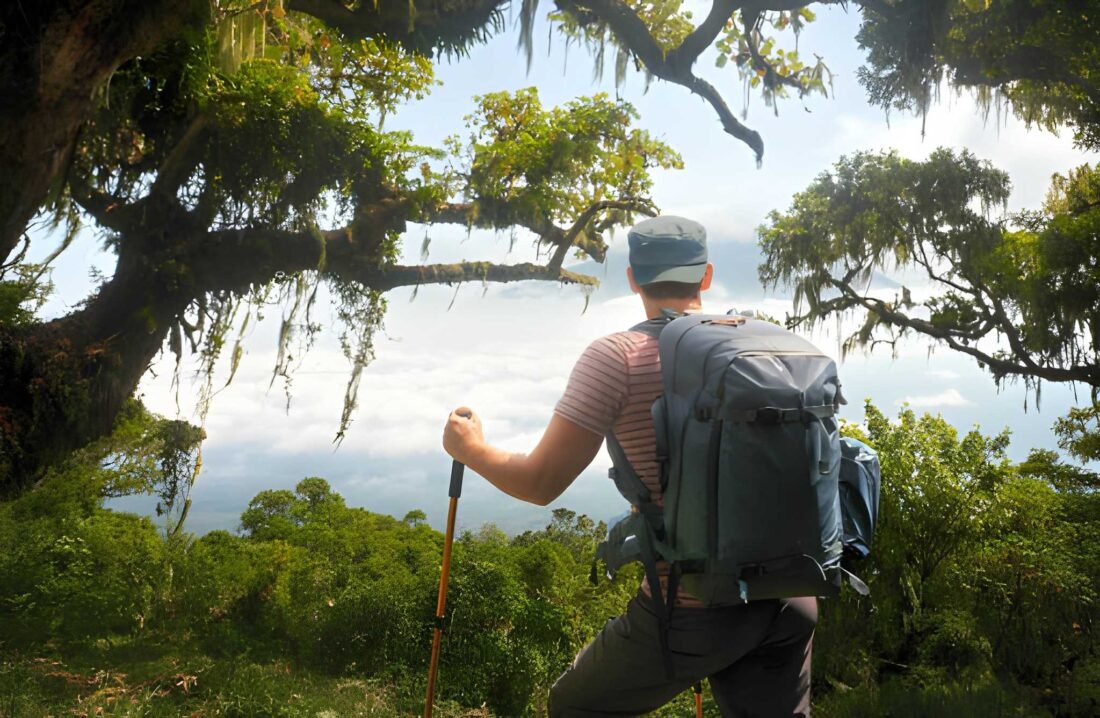
Your Kilimanjaro Packing List: Essential Gear, Layering Systems & What to Rent
Introduction: Your Armor Against the Equatorial Ice
Climbing Mount Kilimanjaro is not just a physical journey—it’s a passage through five climate zones in a single ascent. You begin in humid rainforest, walk through alpine desert, and finish in an Arctic world where the air burns your lungs and the cold tests your resolve.
On Kilimanjaro, the right gear is not about comfort. It is about safety.
Many summit attempts fail not because of fitness or motivation—but because of cold, wet clothing, or poorly chosen equipment. Mountain guides often say:
“It’s not the mountain that defeats you. It’s the cold.”
This guide will walk you through:
The three-layer system trusted by professional guides
The non-negotiable essentials for summit success
What you should buy vs. rent to save money without sacrificing safety
Trekking poles reduce impact on your knees and ankles by up to 30%, especially during the long descent.
They are not optional. Your knees will thank you.
3. Summit Night Survival Kit: Arctic Conditions on the Equator
Summit night is the coldest, hardest part of Kilimanjaro. This is where preparation becomes survival.
Cold-Weather Essentials
Insulated water flask: Hydration bladders freeze
Chemical hand & toe warmers: Activate before starting
Powerful headlamp: With spare batteries
Every step you take before dawn depends on this light.
4. Buy or Rent? Smart Gear Decisions
High-quality mountaineering gear is expensive—and bulky.
The good news? Most reputable Tanzanian operators offer excellent rental equipment.
Best Items to Rent Locally
Item
Why Renting Makes Sense
Heavy down jacket
Saves hundreds of dollars
Cold-rated sleeping bag
No need to buy Arctic gear
Trekking poles
Bulky for flights
Items You Must Buy
Hiking boots (must be broken in)
Base layers
Personal clothing
Rental specifications to demand:
Down jacket: 800+ fill power
Sleeping bag: Comfort rating −15°C to −20°C
Summit mittens: Waterproof, windproof, insulated
Saving money on rentals allows you to invest in what truly matters: a safe, ethical operator.
Kilimanjaro Cost Breakdown: Plan Before You Climb
Climbing Mount Kilimanjaro is not only a physical challenge — it is also a financial decision that deserves careful planning. From park fees and porter wages to route length and gear rental, the cost of a Kilimanjaro trek can vary dramatically depending on how you prepare. To avoid hidden fees and unrealistic offers, we created a complete breakdown of Kilimanjaro climbing expenses, including real budget examples for 5, 6, 7, and 8-day routes, plus a comparison between budget, mid-range, and luxury climbs.
Packing for Kilimanjaro is more than logistics—it’s a mindset.
When your gear is dialed in, your confidence rises. When your boots fit perfectly, your steps feel stronger. When you trust your layers, the cold loses its power over you.
With the right system, you’ve removed most physical barriers between yourself and Uhuru Peak.
Now, only one thing remains.
The climb itself—and the sunrise you’ll never forget.
Manage Consent
To provide the best experiences, we use technologies like cookies to store and/or access device information. Consenting to these technologies will allow us to process data such as browsing behavior or unique IDs on this site. Not consenting or withdrawing consent, may adversely affect certain features and functions.
Functional
Always active
The technical storage or access is strictly necessary for the legitimate purpose of enabling the use of a specific service explicitly requested by the subscriber or user, or for the sole purpose of carrying out the transmission of a communication over an electronic communications network.
Preferences
The technical storage or access is necessary for the legitimate purpose of storing preferences that are not requested by the subscriber or user.
Statistics
The technical storage or access that is used exclusively for statistical purposes.The technical storage or access that is used exclusively for anonymous statistical purposes. Without a subpoena, voluntary compliance on the part of your Internet Service Provider, or additional records from a third party, information stored or retrieved for this purpose alone cannot usually be used to identify you.
Marketing
The technical storage or access is required to create user profiles to send advertising, or to track the user on a website or across several websites for similar marketing purposes.