Introduction: When the Mountain Tests More Than Your Legs
On Mount Kilimanjaro, strength is rarely the problem. The real challenge is invisible.
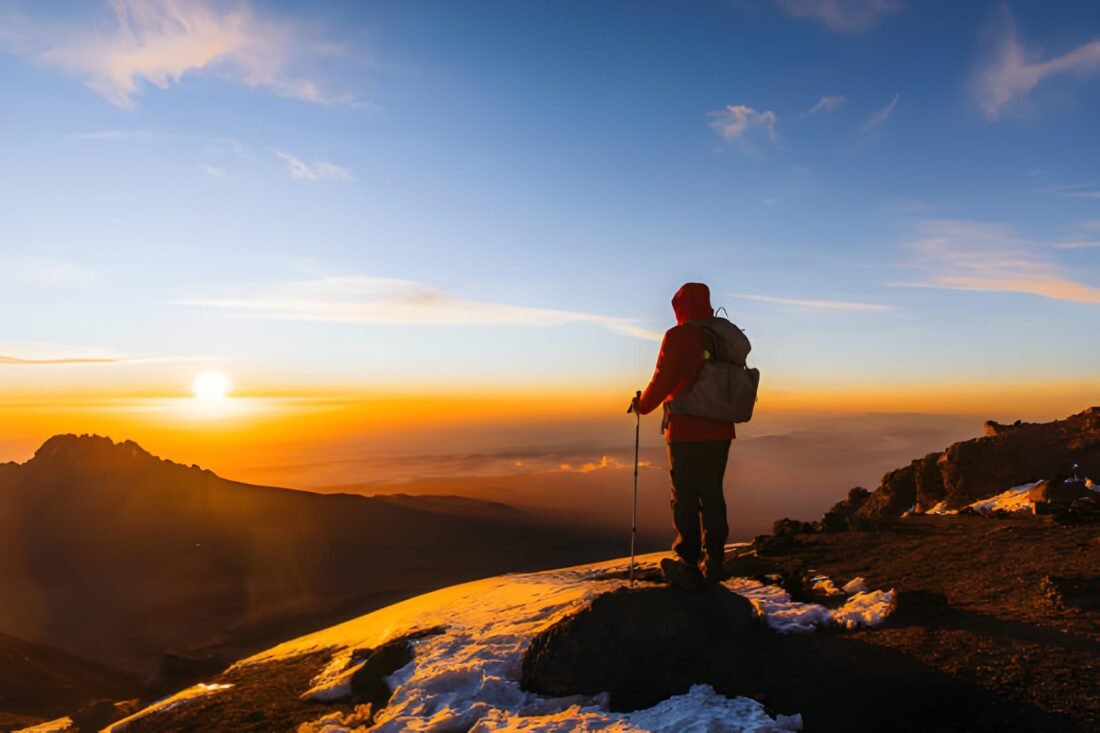
As you climb toward Uhuru Peak (5,895 m), the air becomes thinner with every step. Your lungs work harder. Your heart beats faster. And quietly—often without warning—your body may begin to struggle with something far more serious than fatigue: Acute Mountain Sickness (AMS).
AMS is the single most common reason climbers fail to reach the summit. It is also the most misunderstood.
The reassuring truth? AMS is predictable, manageable, and in most cases preventable.
This guide explains what altitude sickness really is, how to prevent it, how medications like Diamox work, and—most importantly—how to recognize the moment when safety must come before the summit.
3. Safety Protocols: What Responsible Guides Must Do
On Kilimanjaro, your safety depends heavily on your guide.
A professional operator treats health checks as non-negotiable.
Daily Health Monitoring
A responsible guide will check you at least twice daily using:
Pulse oximeter (SpO₂ + heart rate)
Lake Louise Scoring System (LLSS)
Gait test (heel-to-toe walking to detect HACE)
Numbers matter—but experience matters more. Trained guides know what is normal for each altitude.
Emergency Equipment & Evacuation
Every reputable operator must carry:
Supplemental oxygen
Gamow Bag (portable hyperbaric chamber)
Clear descent and evacuation plan
Descent is the only true cure for AMS. No summit is worth a life.
4. When AMS Becomes Dangerous: Know the Levels
Severity
Symptoms
Required Action
Mild AMS
Headache, nausea, fatigue, poor sleep
Stop ascent, hydrate, monitor
Moderate AMS
Severe headache, vomiting, loss of coordination
Immediate descent
Severe AMS
HACE: confusion, inability to walk HAPE: breathlessness, chest tightness
Emergency descent (life-threatening)
Never allow pressure—from yourself, your group, or your crew—to override medical judgment.
Kilimanjaro Cost Breakdown: Plan Before You Climb
Climbing Mount Kilimanjaro is not only a physical challenge — it is also a financial decision that deserves careful planning. From park fees and porter wages to route length and gear rental, the cost of a Kilimanjaro trek can vary dramatically depending on how you prepare. To avoid hidden fees and unrealistic offers, we created a complete breakdown of Kilimanjaro climbing expenses, including real budget examples for 5, 6, 7, and 8-day routes, plus a comparison between budget, mid-range, and luxury climbs.
Conclusion: Knowledge Is Your Strongest Safety Tool
Kilimanjaro is not conquered—it is respected.
A successful climb is not defined by standing on the summit, but by returning healthy with memories instead of regrets.
By understanding AMS, listening to your body, trusting your guides, and embracing Pole Pole, you remove the mountain’s greatest danger.
Go slowly. Drink often. Breathe deeply.
The summit will wait. Your health cannot.
Manage Consent
To provide the best experiences, we use technologies like cookies to store and/or access device information. Consenting to these technologies will allow us to process data such as browsing behavior or unique IDs on this site. Not consenting or withdrawing consent, may adversely affect certain features and functions.
Functional
Always active
The technical storage or access is strictly necessary for the legitimate purpose of enabling the use of a specific service explicitly requested by the subscriber or user, or for the sole purpose of carrying out the transmission of a communication over an electronic communications network.
Preferences
The technical storage or access is necessary for the legitimate purpose of storing preferences that are not requested by the subscriber or user.
Statistics
The technical storage or access that is used exclusively for statistical purposes.The technical storage or access that is used exclusively for anonymous statistical purposes. Without a subpoena, voluntary compliance on the part of your Internet Service Provider, or additional records from a third party, information stored or retrieved for this purpose alone cannot usually be used to identify you.
Marketing
The technical storage or access is required to create user profiles to send advertising, or to track the user on a website or across several websites for similar marketing purposes.