
Introduction: Discover Tanzania Beyond the Tourist Attractions
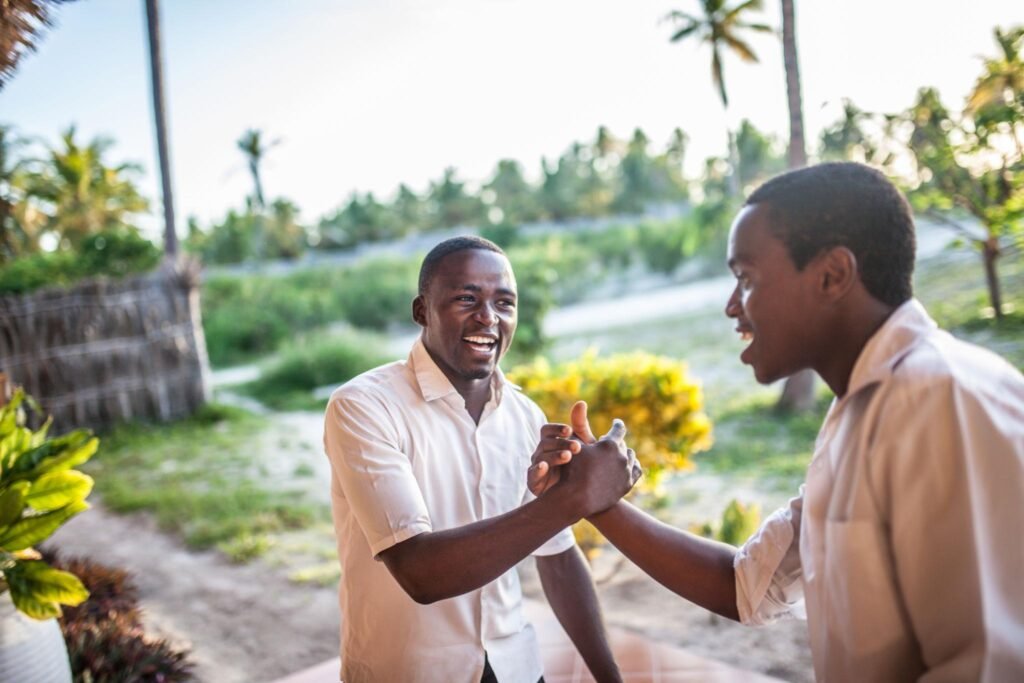
Tanzania is famous for its extraordinary wildlife, Mount Kilimanjaro, and the beautiful beaches of Zanzibar. But a memorable journey is not only about the places you visit. It is also about the people you meet, the conversations you share, and the small moments that help you understand everyday life.
Imagine greeting your safari guide in Swahili, thanking a guesthouse host in their language, or asking a shopkeeper a simple question at a local market. Even a few familiar words can make these interactions more personal.
Swahili, known locally as Kiswahili, is widely spoken throughout Tanzania and helps people from different linguistic communities communicate. English is also used in tourism and hospitality, although not everyone speaks it comfortably.
You do not need to become fluent before your trip. Learning a handful of useful expressions and understanding basic cultural etiquette can help you communicate more confidently and respectfully.
This guide covers essential Swahili phrases for travelers, pronunciation tips, practical conversations, and cultural etiquette for visiting mainland Tanzania and Zanzibar.
1. What Languages Are Spoken in Tanzania?
Tanzania is home to many linguistic communities. Swahili plays a central role in communication across the country, while numerous local languages remain part of everyday community life.
Swahili: The most useful language for visitors to learn
Swahili is used in everyday conversations, public life, markets, education, and communication between people with different first languages.
You may see it called Kiswahili. This is the Swahili name for the language.
For travelers, learning a few Swahili expressions is useful even when an itinerary is organized in English. It can help you greet people, express gratitude, ask simple questions, and show an interest in the place you are visiting.
Is English spoken in Tanzania?
English is used in many hotels, safari companies, tourist attractions, and professional settings. Your safari guide, tour coordinator, or hotel receptionist may speak English well.
However, English proficiency varies. Outside established tourist settings, you may encounter people who prefer to communicate in Swahili or another local language.
A translation app, a phrase list saved on your phone, and a little patience can help bridge the gap.
Why language is connected to culture
Language is more than vocabulary. Greetings, tone, and the way a request is introduced can influence how an interaction feels.
Learning Swahili will not automatically make you familiar with every Tanzanian custom. It does, however, give you a useful starting point for approaching people with curiosity and respect.
2. Essential Swahili Greetings and Responses
Greetings are among the most useful expressions to learn before arriving in Tanzania. In many everyday settings, beginning with a greeting before asking a question is considered courteous.
| Swahili | English meaning |
|---|---|
| Habari? | How are you? / What’s the news? |
| Habari za asubuhi? | How is your morning? |
| Habari za mchana? | How is your afternoon? |
| Habari za jioni? | How is your evening? |
| Hujambo? | Hello / Are you well? |
| Sijambo | I am well |
| Nzuri, asante | Fine, thank you |
| Mambo? | What’s up? — informal |
| Poa | Cool / Fine — informal |
| Asante | Thank you |
| Asante sana | Thank you very much |
| Karibu | Welcome / You’re welcome |
| Kwaheri | Goodbye |
These are common introductory expressions, but the natural choice of greeting and response can vary according to the setting, relationship, and local usage.
How to respond to a greeting
Here is a simple exchange you might use when meeting someone at your accommodation.
Person A: Habari?
Person B: Nzuri, asante. Na wewe?
Person A: Nzuri, asante.
Approximate meaning:
- Person A: How are you?
- Person B: Fine, thank you. And you?
- Person A: Fine, thank you.
You may also hear Mambo? among friends or in informal conversations. A common response is Poa. When meeting someone for the first time in a formal or unfamiliar setting, a more neutral greeting such as Habari? is a sensible choice.
A respectful greeting for an older person
You may hear Shikamoo used as a traditional respectful greeting toward an older person or someone to whom the speaker wishes to show particular respect.
The customary response is Marahaba.
- Younger speaker: Shikamoo.
- Older person: Marahaba.
This expression is not a universal greeting for every situation. If you are unsure whether it is appropriate, observe local practice or ask your guide.
3. Essential Swahili Phrases for Everyday Travel
The following phrases can help you communicate in hotels, shops, towns, and other everyday settings.
| English | Swahili |
|---|---|
| Please | Tafadhali |
| Thank you | Asante |
| Thank you very much | Asante sana |
| Excuse me / Sorry | Samahani |
| Yes | Ndiyo |
| No | Hapana |
| I understand | Ninaelewa |
| I don’t understand | Sielewi |
| Please help me | Tafadhali, nisaidie |
| Do you speak English? | Unazungumza Kiingereza? |
| What is your name? | Unaitwa nani? |
| My name is… | Ninaitwa… |
| Where is…? | … iko wapi? |
| How much is this? | Hii ni bei gani? |
| No problem | Hakuna shida |
These are practical introductory phrases. Longer sentences may need to change according to the situation, so use them as a starting point rather than a substitute for a fluent speaker.
What to say when you do not understand
Communication becomes easier when you can explain that you need help.
Try these expressions:
- Sielewi. — I don’t understand.
- Tafadhali, nisaidie. — Please help me.
- Unazungumza Kiingereza? — Do you speak English?
- Pole pole, tafadhali. — Slowly, please.
If the conversation concerns something important, such as a booking, payment, or medical issue, ask for clarification instead of relying on a phrase you are not sure you understand.
4. Swahili Phrases for Hotels and Accommodation
You may use these expressions when checking into a hotel, speaking with a host, or asking for basic assistance.
| English | Swahili |
|---|---|
| Where is my room? | Chumba changu kiko wapi? |
| I need help | Ninahitaji msaada |
| Where is the bathroom? | Choo kiko wapi? |
| What time is it? | Saa ngapi? |
| Thank you for your help | Asante kwa msaada wako |
| Welcome | Karibu |
A simple conversation at reception
Traveler: Habari. Nina nafasi kwa jina la Smith.
Receptionist: Karibu. Una pasipoti yako?
Traveler: Ndiyo, hii hapa. Asante.
Approximate meaning:
- Traveler: Hello. I have a reservation under the name Smith.
- Receptionist: Welcome. Do you have your passport?
- Traveler: Yes, here it is. Thank you.
This is an illustrative conversation. In practice, hotel staff may use different wording or switch to English.
For important booking details, show your confirmation and ask staff to clarify any information you do not understand.
5. Swahili Phrases for Markets and Shopping
Markets offer opportunities to practise everyday Swahili. Start with a greeting, ask the price politely, and take your time if you need to understand the answer.
| English | Swahili |
|---|---|
| How much is this? | Hii ni bei gani? |
| It is expensive | Ni ghali |
| Can you reduce the price? | Unaweza kupunguza bei? |
| I would like this | Ningependa hii |
| Thank you | Asante |
| I am just looking | Ninaangalia tu |
Bargaining may be customary in some markets but not in every shop. Check whether prices are fixed and keep negotiations friendly.
If you cannot agree on a price, thank the seller and move on politely. Avoid assuming that every interaction should become a bargaining opportunity or a photograph for your travel collection.
Want to discover Tanzanian food?
If you are interested in local dishes and where to try them, read our Tanzanian Food Guide.
That guide focuses on what to eat and where to find it, while this article helps you prepare to communicate during everyday interactions.
6. Swahili Phrases for Transport and Directions
When exploring a town or travelling between destinations, short questions can be useful.
| English | Swahili |
|---|---|
| Where is the bus station? | Kituo cha basi kiko wapi? |
| Where is the airport? | Uwanja wa ndege uko wapi? |
| Where is the hotel? | Hoteli iko wapi? |
| Is it far? | Ni mbali? |
| Please stop here | Tafadhali, simama hapa |
| I need a taxi | Ninahitaji teksi |
| Thank you | Asante |
For airport transfers and longer journeys, confirm your destination and price before departure. If you are unsure about directions, show the address on your phone or ask your accommodation or tour operator for assistance.
During a safari, transport arrangements are usually coordinated with your driver or guide. Confirm pickup times and locations in advance rather than relying on a short phrase alone.
For broader preparation, see our Essential Travel Tips for Tanzania.
7. Swahili Phrases for Safaris and Guided Activities
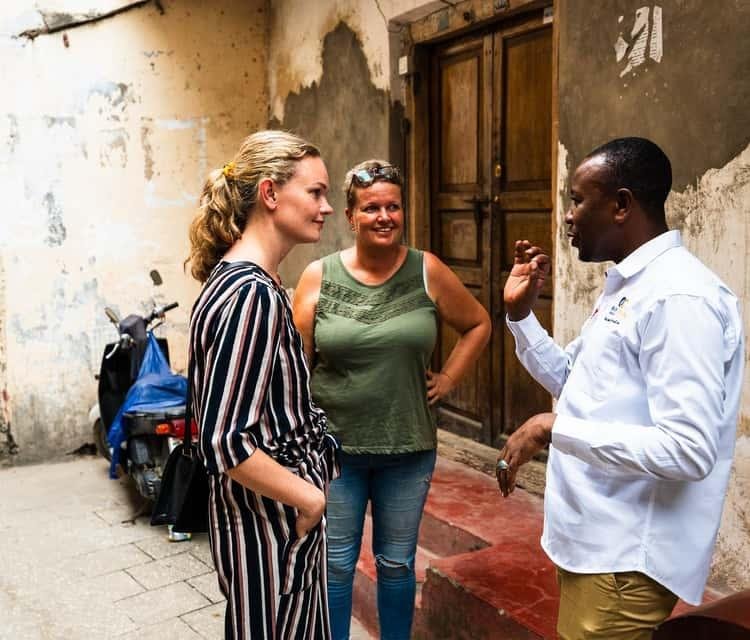
Many organized safaris in Tanzania operate in English or another language arranged with the tour operator. Nevertheless, Swahili can be useful when greeting staff, thanking your driver, or communicating with people you meet along the way.
| English | Swahili |
|---|---|
| Good morning | Habari za asubuhi |
| I am ready | Niko tayari |
| I am tired | Nimechoka |
| Is it far? | Ni mbali? |
| Can we stop here? | Tunaweza kusimama hapa? |
| I need help | Ninahitaji msaada |
| Thank you, guide | Asante, mwongoza watalii |
Use these expressions as simple conversation starters. For safety instructions, wildlife encounters, or emergencies, make sure you clearly understand your guide and ask for clarification if necessary.
Respect wildlife and local guidance
A safari is not only an opportunity to see animals; it is also a setting where safety and responsible conduct matter.
Follow your guide’s instructions, obey park rules, and never approach wildlife to take a photograph. During community visits, ask before taking pictures and follow your host’s guidance about appropriate behavior.
For more ideas about learning from Tanzania’s communities, read our guide to Top 10 Cultural Experiences in Tanzania.
It explores cultural activities and places to discover, while this guide focuses on language and respectful communication.
8. How to Pronounce Swahili Words
Swahili spelling is generally consistent, making it relatively approachable for beginners. The five vowels usually have stable sounds.
| Vowel | Approximate pronunciation |
|---|---|
| A | Similar to the “a” in father |
| E | Similar to the “e” in bed |
| I | Similar to the “ee” in see |
| O | Similar to the “o” in more |
| U | Similar to the “oo” in food |
These are approximations rather than exact phonetic descriptions. English accents differ, and some Swahili sounds do not have a perfect English equivalent.
Practise these common expressions
- Asante: ah-SAHN-teh
- Karibu: kah-REE-boo
- Tafadhali: tah-fah-DHAH-lee
- Kwaheri: kwah-HEH-ree
- Pole pole: POH-leh POH-leh
Listening to a fluent speaker is the best way to improve pronunciation. Try repeating each phrase aloud and practising it in a short conversation.
You do not need a perfect accent. A polite attempt is a useful beginning, and people may help you if you ask them to repeat or explain an expression.
9. Cultural Etiquette: How to Show Respect in Tanzania
Language is only one part of communication. Tone, timing, privacy, and awareness of the setting are also important.
Tanzania includes many communities, and customs vary according to region, generation, religion, and individual preference. The following suggestions are practical guidelines, not rules that apply identically to everyone.
Begin with a greeting
In many settings, greeting someone before making a request is courteous.
For example:
“Habari? Samahani, kituo cha basi kiko wapi?”
This means approximately: “Hello, excuse me, where is the bus station?”
A friendly greeting can make a request feel more considerate and give the other person a moment to respond.
Be patient when communication is difficult
If someone does not understand your question, try simpler words, speak slowly, or ask whether they speak English.
Avoid raising your voice simply because there is a language barrier. If you need help, use a translation app or ask your guide to explain the situation.
Respect older people and social context
Expressions such as Shikamoo can convey traditional respect in appropriate situations. However, their use depends on the relationship and context.
When you are uncertain, a friendly greeting is a good starting point. Observe local practice rather than assuming that every person expects the same form of address.
Ask before taking photographs
Always seek permission before photographing people, especially children, private homes, ceremonies, or personal activities.
If someone declines, accept the answer without pressure. Ask your guide for help if you are unsure how to communicate your request.
You should also observe photography restrictions at heritage sites, religious locations, and other attractions.
Dress appropriately for the setting
Practical safari clothing is suitable for most wildlife excursions. In towns, villages, and religious settings, more modest clothing is often a considerate choice.
Zanzibar has a strong Muslim cultural heritage. Away from resort pools and designated beach areas, covering the shoulders and knees is a sensible guideline in many public settings.
Follow instructions at mosques and other religious sites, including any requirements concerning footwear, head coverings, or access.
Respect personal boundaries
Do not assume that residents want to be photographed, interviewed, or included in a tourist activity.
Ask before entering a home or private space, follow your host’s instructions, and respect the privacy of local communities.
Responsible cultural travel means allowing people to decide what they are comfortable sharing.
Experience the Real Tanzania with Local Experts
Learning a few Swahili phrases is a great way to connect with local people. Take your experience further with a Tanzania safari, a cultural adventure, or a relaxing beach holiday in Zanzibar.
Let Nomadic Routes help you plan a trip tailored to your interests, travel dates, and budget.
10. Mainland Tanzania and Zanzibar: What Should Travelers Know?
Swahili is widely spoken on both mainland Tanzania and Zanzibar, but cultural practices and social expectations are not identical everywhere.
Mainland Tanzania includes diverse urban, rural, agricultural, and pastoralist communities. Everyday expressions and customs can vary by region and situation.
Zanzibar has a distinctive Swahili coastal heritage shaped by centuries of Indian Ocean exchange, including African, Arab, and South Asian influences. Islam plays an important role in the lives of many residents and influences public customs in some settings.
For travelers, the practical lesson is to adapt to the place you are visiting.
In Stone Town and local villages, dress modestly, ask before photographing residents, and show respect near mosques and religious events. At a beach resort, expectations may be different from those in a residential neighborhood.
Avoid treating one person’s experience as representative of an entire country. Listen to local guidance and ask questions politely when you are unsure.
If Zanzibar is part of your trip, our Zanzibar Travel Guide offers further practical information about the island and its destinations.
11. Common Cultural and Language Mistakes to Avoid
You do not need to know every local custom before arriving. However, a few habits can help you avoid misunderstandings.
Skipping greetings. Begin conversations politely instead of immediately making a request.
Assuming everyone speaks English. English is useful in many tourism settings, but it is not universal.
Using informal greetings in every situation. Mambo? is casual, so a more neutral greeting may be appropriate when meeting someone for the first time.
Expecting perfect pronunciation. Learn gradually and listen to fluent speakers.
Photographing people without permission. Ask first and respect a refusal.
Assuming all communities share the same customs. Tanzania is diverse, and cultural practices vary.
Bargaining aggressively. Negotiate politely only where bargaining is customary.
Ignoring local guidance. Follow instructions during safaris, village visits, and religious or heritage-site visits.
The goal is not to know every rule in advance. It is to travel with curiosity, humility, and a willingness to learn.
12. A Quick Swahili Cheat Sheet for Travelers
Save this table on your phone so you can refer to it during your trip.
| Situation | Swahili phrase | English meaning |
|---|---|---|
| Greeting someone | Habari? | How are you? |
| Saying thank you | Asante | Thank you |
| Showing appreciation | Asante sana | Thank you very much |
| Asking politely | Tafadhali | Please |
| Getting someone’s attention | Samahani | Excuse me |
| Asking a price | Hii ni bei gani? | How much is this? |
| Asking for directions | … iko wapi? | Where is…? |
| Asking for help | Tafadhali, nisaidie | Please help me |
| Saying goodbye | Kwaheri | Goodbye |
| Asking someone to slow down | Pole pole, tafadhali | Slowly, please |
Start by learning five expressions and practising them aloud. Add more phrases as you become comfortable.
You can also ask your safari guide or accommodation host to help you with pronunciation and explain which expressions are most natural in a particular setting.
Frequently Asked Questions
Is Swahili useful for tourists in Tanzania?
Yes. Swahili is widely used throughout Tanzania. Basic phrases can help visitors greet people, ask simple questions, and communicate politely. English is also used in many tourism settings, but not everyone speaks it comfortably.
What is the most useful Swahili phrase to learn first?
Asante, meaning “thank you,” is useful in many situations. Habari? is also a helpful greeting. Learning Tafadhali (“please”) and Samahani (“excuse me” or “sorry”) is worthwhile too.
How do you say hello in Swahili?
Habari? is a common greeting. Hujambo? is another option, with Sijambo as a customary response. You may also hear Jambo, which is familiar to many visitors.
Do people in Zanzibar speak Swahili?
Yes. Swahili is widely spoken in Zanzibar and is central to everyday communication. English is also used in tourism, although English proficiency varies from person to person.
Do I need to learn Swahili before visiting Tanzania?
No. You can visit Tanzania without speaking Swahili, particularly if your trip is organized in English. However, learning a few greetings and polite expressions can make everyday interactions easier.
How should I greet an older person in Tanzania?
Shikamoo is a traditional respectful greeting used toward an older person or someone deserving particular respect in relevant social settings. The customary response is Marahaba. If you are unsure whether it is appropriate, observe local practice or ask your guide.
What cultural etiquette should visitors follow in Tanzania?
Begin conversations with a greeting, ask before taking photographs, dress appropriately for the setting, and follow local guidance at religious sites and during community visits. Customs vary, so remain attentive and respectful.
Is Zanzibar culturally different from mainland Tanzania?
Zanzibar shares Swahili language and cultural connections with mainland Tanzania, but it has its own distinctive coastal history and strong Muslim cultural influences. Visitors should respect local expectations, particularly regarding dress and behavior in public and religious settings.
Conclusion: A Few Words Can Make a Difference
Tanzania offers extraordinary wildlife, landscapes, and beaches, but the people you meet can also become an important part of your journey.
You do not need fluent Swahili or extensive cultural knowledge to communicate respectfully. Start with a greeting, say thank you, listen carefully, and remain willing to learn.
Before departure, read our Essential Travel Tips for Tanzania for practical advice on preparing for your trip.
To explore cultural activities, visit our guide to Top 10 Cultural Experiences in Tanzania. For local dishes and where to find them, read our Tanzanian Food Guide.
With a few useful phrases and a respectful attitude, you can approach Tanzania with greater confidence and make your journey more rewarding.
Ready to Discover Tanzania?
From unforgettable wildlife safaris to authentic cultural encounters and the beaches of Zanzibar, Tanzania offers much more than a holiday.
Start planning your adventure with Nomadic Routes. Explore your options and get in touch to discuss a trip that suits your travel style and budget.