Katavi National Park is one of Tanzania’s most remote safari destinations. Far from the country’s busiest northern safari circuit, Katavi offers a wilderness experience for travelers who want fewer crowds, dramatic landscapes, and the feeling of being genuinely immersed in the African bush.
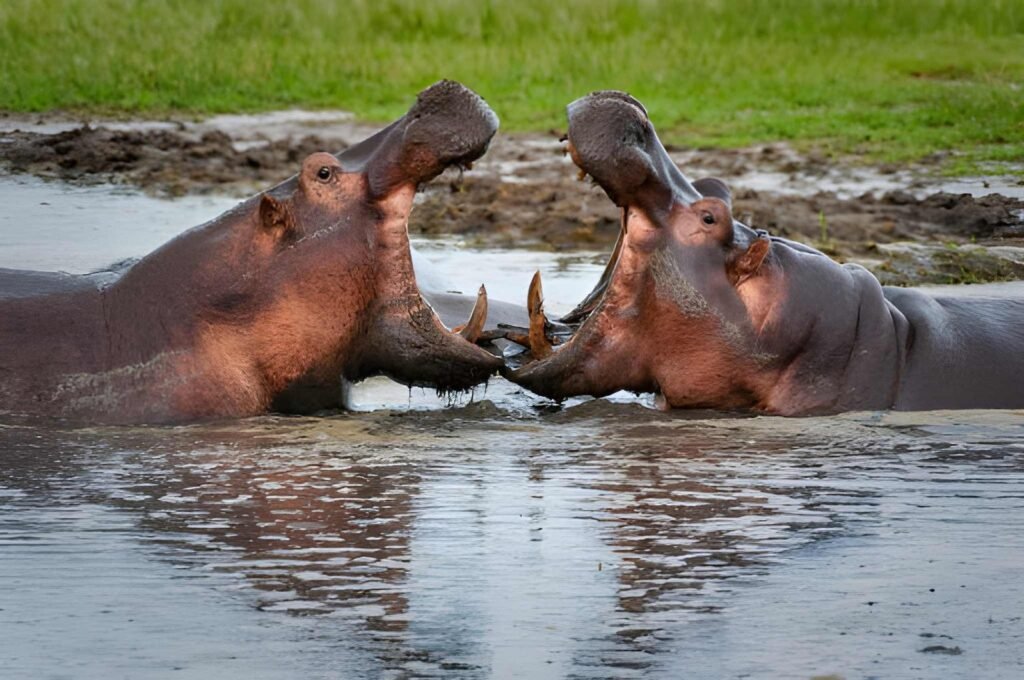
The park is particularly known for its large concentrations of hippos, buffalo, elephants and crocodiles, while lions and other predators can also be encountered during game drives.
But Katavi is not simply another national park to add to a Tanzania itinerary.
Its remote location affects how you reach it, how long you should stay, what type of accommodation makes sense, and ultimately how much your safari costs.
In this guide, we’ll cover everything you need to know before planning a Katavi safari, including wildlife, activities, the best time to visit, accommodation, transportation, TANAPA fees for 2026/2027, realistic safari costs, and how Katavi compares with better-known destinations such as Serengeti and Ruaha.
Planning tip: Katavi works particularly well for travelers who value remoteness and wilderness over convenience. If you are trying to decide whether Katavi belongs in your Tanzania itinerary, start by understanding what makes the park different from the more accessible northern circuit.
Why Visit Katavi National Park?
Katavi is not Tanzania’s most famous national park.
That is actually part of its appeal.
The Serengeti, Ngorongoro and Tarangire attract travelers from around the world, while Katavi receives far fewer visitors because of its remote location.
For some travelers, that difference is exactly what they are looking for.
A Katavi safari can offer:
- A strong sense of wilderness
- Fewer safari vehicles in many areas
- Large concentrations of wildlife
- Excellent opportunities for wildlife photography
- Walking safari experiences
- Night game drives
- Remote camping and fly camping
- A slower, more immersive safari atmosphere
Katavi is particularly appealing if you have already experienced Tanzania’s more famous parks and want to explore somewhere less conventional.
It can also work for first-time visitors who deliberately want to avoid the classic tourist circuit.
However, remote does not mean automatically better. If your main goal is the Great Migration, for example, Serengeti should probably remain a priority. Our Serengeti National Park Safari Guide explains what makes that destination different.
Where Is Katavi National Park?
Katavi National Park is located in western Tanzania, away from the country’s main northern safari circuit.
Its remote position is one of the defining characteristics of the destination.
Unlike parks such as Tarangire, Ngorongoro and Serengeti, Katavi is not usually included in a short, standard Northern Circuit itinerary.
That has two consequences.
First, reaching Katavi requires more planning.
Second, the journey itself helps explain why the park feels so different.
You are traveling farther into Tanzania’s wilderness rather than moving between several highly developed tourist destinations.
If you are still deciding between Tanzania’s different safari regions, our guide to Northern vs Southern Tanzania Safari is a useful starting point.
What Makes Katavi Different From Other Tanzania Safaris?
The biggest difference is remoteness.
Katavi is not designed around high-volume tourism.
The experience is more about getting away from the crowds and spending time in a large, relatively undeveloped wilderness landscape.
Compare that with a destination such as Serengeti during a busy period.
In Serengeti, you may have many opportunities to see spectacular wildlife, but popular sightings can also attract several safari vehicles.
Katavi offers a different proposition.
You travel farther to experience a quieter side of Tanzania.
This is also why Katavi can be more expensive than travelers initially expect.
The park fees themselves are only one part of the equation. Transportation, flights, fuel, vehicles, guides and accommodation all contribute to the final safari price.
We explain the broader reasons behind Tanzania safari pricing in Why Are Tanzania Safaris So Expensive?.
Katavi National Park Wildlife
Katavi’s wildlife is one of the main reasons experienced safari travelers put the park on their list.
The park is especially associated with hippos, buffalo, elephants and crocodiles, but the wildlife experience extends well beyond those species.
Depending on the season and location within the park, you may encounter:
- Hippopotamus
- African elephants
- African buffalo
- Lions
- Crocodiles
- Giraffes
- Zebras
- Antelopes
- Warthogs
- Various bird species
The exact animals you see can never be guaranteed.
That is an important point for any safari.
Wildlife is wild, and sightings depend on season, water availability, animal movements, weather and simple luck.
Hippos in Katavi
Hippos are among Katavi’s most recognizable wildlife attractions.
During the dry season, water becomes increasingly concentrated in the remaining rivers and pools.
This can result in remarkable concentrations of hippos around the available water.
Watching a large group of hippos packed into a shrinking pool is one of the experiences that can make Katavi feel very different from a conventional game drive elsewhere.
Elephants and Buffalo
Katavi is also known for its large populations of elephants and buffalo.
Buffalo can gather in substantial herds, particularly around areas where water and grazing remain available.
Elephants, meanwhile, can be encountered moving between water sources and feeding areas.
For photographers, these large concentrations can create excellent opportunities for wide environmental images rather than simply close-up animal portraits.
Lions and Other Predators
Katavi is not only about herbivores.
Predators, including lions, are part of the ecosystem.
Lion sightings cannot be guaranteed on any specific game drive, but the presence of large herbivore populations provides the ecological foundation for predator activity.
A good guide makes a major difference here.
Knowing where animals are likely to move, understanding tracks and reading the behavior of prey species can dramatically improve the quality of a safari.
Birdlife in Katavi
Katavi is also worth considering if you are interested in birdwatching.
The park’s different habitats support a variety of bird species, particularly around water and woodland areas.
If birds are a major priority for your trip, tell your safari operator before booking.
A tailor-made itinerary can then take your interests into account rather than treating birdwatching as an afterthought.
Best Things to Do in Katavi National Park
A Katavi safari does not have to mean driving around in a vehicle from sunrise to sunset.
Depending on the applicable park rules, your itinerary can include several different experiences.
Game Drives
Game drives are the foundation of most Katavi safaris.
Early morning drives can take advantage of cooler temperatures and active wildlife.
Afternoon drives allow you to explore different areas as the day develops.
A full-day game drive can also make sense in a remote park because you have more time to explore rather than repeatedly returning to camp.
Night Game Drives
Night game drives offer a completely different experience.
The park changes after dark.
Nocturnal wildlife becomes more active, while the atmosphere becomes quieter and more mysterious.
TANAPA’s 2026/2027 tariff lists a separate charge for night game drives.
For an adult in the Ex/NR categories shown in the tariff:
TZS 127,750 — approximately US$47.84
The USD conversion uses the exchange rate of US$1 = TZS 2,670.23 on August 11, 2026.
Currency note: TANAPA’s official tariff is the TZS amount. USD figures in this guide are approximate conversions and can change as exchange rates move.
Walking Safaris
Walking allows you to experience the ecosystem differently.
Instead of focusing mainly on large animals, you begin noticing:
- Animal tracks
- Insects
- Plants
- Birds
- Sounds
- Scents
- Smaller signs of wildlife
The 2026/2027 TANAPA tariff shown for Katavi includes separate short and long walking safari fees.
For example:
Long Walking Safari — Adult Ex/NR: TZS 63,875 (~US$23.92)
Short Walking Safari — Adult Ex/NR: TZS 51,100 (~US$19.14)
The applicable tariff depends on the visitor category and activity.
Fly Camping
For travelers who want a more immersive experience, fly camping can take the wilderness element further.
Rather than returning to a conventional lodge every evening, you spend the night in a temporary mobile camp.
The TANAPA tariff shown for 2026/2027 lists:
Fly Camping Adult Ex/NR: TZS 127,750 (~US$47.84)
But this is not the total price of a fly-camping safari.
A real fly-camping experience also requires tents, food, staff, equipment, transportation and logistics.
If you like the idea of sleeping closer to the wilderness, our Mobile Safari Tanzania Guide explains the concept in much more detail.
Best Time to Visit Katavi National Park
The best time to visit depends on what you want from the safari.
Dry Season
The dry season is generally the most attractive period for travelers whose priority is wildlife viewing.
As water sources become more limited, animals concentrate around remaining water.
This can make wildlife easier to locate.
The landscape also becomes drier, which can improve visibility.
For a first safari focused heavily on wildlife, this period can be particularly appealing.
Green Season
The wetter months create a different experience.
The landscape becomes greener, vegetation changes, and birdlife can become particularly interesting.
There may also be fewer travelers.
The trade-off is that wildlife can be more dispersed because water is more widely available.
So there is no universally perfect month.
There is only the season that best matches your priorities.
For broader Tanzania seasonality, see our Best Time to Visit Tanzania for Safari, Kilimanjaro & Zanzibar.
How Many Days Do You Need in Katavi?
Because Katavi is remote, I would not recommend treating it as a destination for an extremely short visit unless logistics make that unavoidable.
If you are going to invest the time and money required to reach western Tanzania, staying long enough to actually experience the park makes more sense.
2–3 Days
A short stay can work if Katavi is part of a larger itinerary.
4–5 Days
This gives you considerably more flexibility for game drives and additional activities.
Longer Stays
Longer trips make more sense for:
- Wildlife photographers
- Serious safari enthusiasts
- Travelers interested in walking
- Travelers interested in fly camping
- People who want a slower safari
If you’re unsure about safari duration generally, compare the options in our 5 Day vs 7 Day vs 10 Day Tanzania Safari Guide.
How to Get to Katavi National Park
Getting to Katavi requires more planning than reaching Tanzania’s most popular safari destinations.
For many travelers, flying is the most practical option, especially when time is limited.
Road travel can also be possible depending on the itinerary, but the distances involved mean that transportation should be planned carefully.
This is one reason Katavi works particularly well as part of a deliberately designed itinerary rather than a last-minute addition.
When requesting a quote, ask specifically:
- Where do we fly from?
- Is the domestic flight included?
- Is airport transfer included?
- How long is the transfer to camp?
- Are road transfers included?
- How many nights are actually spent inside Katavi?
A low safari price can sometimes look attractive until transportation is added.
Where to Stay in Katavi
Your accommodation choice can dramatically change both the character and cost of your safari.
Lodges and Tented Camps
These are ideal if you want comfort while still maintaining a strong connection with the wilderness.
Depending on the property, you may have:
- Comfortable beds
- Private bathrooms
- Meals
- Lounge areas
- Campfire experiences
- Guided activities
For a broader look at this safari style, see our Lodge Safari Tanzania Guide.
Luxury Accommodation
Luxury does not necessarily mean a conventional hotel.
Tanzania’s safari industry includes high-end tented camps and properties designed around the surrounding landscape.
If you are considering a higher-end trip, see:
and Best Luxury Safari Lodges in Tanzania.
Camping
Camping is a different experience.
It can provide a stronger feeling of being immersed in the environment and may reduce accommodation costs.
However, you should not assume that camping automatically means a cheap safari.
The vehicle, guide, food, camping equipment and transportation still cost money.
Our Lodge Safari vs Camping Safari in Tanzania explains the differences in more detail.
Katavi National Park Fees 2026/2027
Now we can look at the official TANAPA component of the cost.
The tariff shown in the documents you provided is valid from:
July 1, 2026 – June 30, 2027
Unlike some older TANAPA tariff documents that displayed dollar amounts, the current Katavi figures we are using here are presented in Tanzanian Shillings.
That means we use TZS as the primary reference and USD only as an approximate conversion.
Katavi Fees Travelers Are Most Likely to Encounter
Rather than reproducing every operational line in the TANAPA tariff, these are the categories most relevant to ordinary safari planning:
| Fee / Activity | Ex / NR | Approx. USD |
|---|---|---|
| Public Camping – Adult | TZS 76,650 | ~$28.71 |
| Public Camping – Child | TZS 12,775 | ~$4.78 |
| Special Camping – Adult | TZS 127,750 | ~$47.84 |
| Seasonal Camping – Adult | TZS 127,750 | ~$47.84 |
| Fly Camping – Adult | TZS 127,750 | ~$47.84 |
| Night Game Drive – Adult | TZS 127,750 | ~$47.84 |
| Night Game Drive – Child | TZS 63,875 | ~$23.92 |
| Long Walking Safari – Adult | TZS 63,875 | ~$23.92 |
| Short Walking Safari – Adult | TZS 51,100 | ~$19.14 |
| Rest House per Head | TZS 76,650 | ~$28.71 |
| Cottage Executive VIP | TZS 255,500 | ~$95.68 |
These are TANAPA charges, not the final amount you should expect to pay for a complete safari package.
Understanding TANAPA Fees vs Your Final Safari Price
This distinction is extremely important.
Imagine you see:
Night Game Drive: TZS 127,750
That does not mean a night safari in Katavi costs only approximately $48.
It means that the relevant TANAPA tariff shown for that activity is approximately $48 at the exchange rate used in this article.
Your operator may still need to cover:
- Safari vehicle
- Driver-guide
- Fuel
- Accommodation
- Meals
- Staff
- Transfers
- Equipment
- Insurance
- Flights
- Other operational costs
This is why you should never compare safari companies by taking the TANAPA fee and assuming it represents the complete trip price.
For a broader explanation of what safari quotations can leave out, read Hidden Costs on Tanzania Safaris.
Katavi Safari Cost: What Actually Determines the Price?
There is no single Katavi safari price.
Your final cost depends on several variables.
Number of Travelers
A private safari for two people can have a very different per-person price from a private safari for six.
The vehicle and guide costs can be spread across more travelers.
For more on this, see Shared vs Private Safari in Tanzania.
Number of Safari Days
A longer safari does not simply mean multiplying a one-day price.
Some costs are daily, while others are fixed or linked to transportation.
For example, the cost structure of a three-day safari can be very different from a seven-day journey.
Accommodation Level
Your choice between:
- Camping
- Mid-range tented camp
- Lodge
- Luxury camp
can substantially change the total.
Transportation
Katavi’s remoteness makes transportation particularly important.
Flights and transfers can represent a meaningful part of the overall cost.
Activities
Adding activities such as:
- Night game drives
- Walking safaris
- Fly camping
- Balloon experiences
can increase your final budget.
Is Katavi More Expensive Than Serengeti?
Not necessarily in every itinerary.
But Katavi can be more expensive than travelers expect because of logistics.
Serengeti is part of Tanzania’s most established safari circuit, with a much larger tourism infrastructure.
Katavi is more remote.
That can mean:
fewer visitors + more wilderness + more logistics
You should therefore compare the total itinerary, not just the park fees.
Katavi vs Ruaha: Which Safari Is Better?
Katavi and Ruaha are both attractive to travelers looking for a more remote Tanzania experience.
But they are not interchangeable.
Choose Katavi if you prioritize:
- Remote wilderness
- Hippos and large concentrations around water
- A less conventional safari destination
- A feeling of isolation
Consider Ruaha if you prioritize:
- A broader southern Tanzania itinerary
- Large landscapes
- Predator-focused safari experiences
- Combining Ruaha with other southern destinations
Our guide to Ruaha and Nyerere explores the Southern Circuit in more detail.
Katavi vs Tarangire
Tarangire is much easier to combine with other Northern Circuit destinations.
It is also famous for elephants and its distinctive baobab landscapes.
Katavi offers a fundamentally different proposition:
accessibility vs remoteness.
If you’re building a first Tanzania safari and have limited time, Tarangire may fit more naturally into a Northern Circuit itinerary.
Read our Tarangire National Park Safari Guide for a detailed look at the park.
Katavi vs Ngorongoro Crater
Ngorongoro offers one of Tanzania’s most distinctive safari environments: a concentrated wildlife ecosystem inside a volcanic crater.
Katavi is almost the opposite in character.
Instead of a compact wildlife destination that fits naturally into a classic northern itinerary, Katavi is about space, distance and wilderness.
If you are comparing the two, read our Ngorongoro Crater Safari Guide before deciding.
Who Should Visit Katavi?
Katavi is particularly well suited to travelers who:
- Have more time available
- Want to go beyond the standard Tanzania itinerary
- Prefer remote destinations
- Enjoy wildlife photography
- Want fewer crowds
- Are interested in walking safaris
- Want a more immersive wilderness experience
- Don’t mind additional travel logistics
It can also be a fantastic choice for experienced safari travelers who have already visited Serengeti and Ngorongoro.
Who Might Prefer Another Tanzania Safari Park?
Katavi may not be the best choice if:
- You have only two or three days for the entire safari
- This is your only opportunity to see the Great Migration
- You want the simplest possible logistics
- Your budget is extremely limited
- You want to combine several northern parks quickly
In those cases, a Northern Circuit itinerary may make more sense.
Our 7-Day Northern Circuit Tanzania Safari Itinerary shows how efficiently the northern parks can be combined.
What to Pack for a Katavi Safari
Your packing list should reflect the type of safari you’re taking.
For a conventional lodge safari, you will generally need:
- Lightweight clothing
- Comfortable walking shoes
- Sun protection
- Sunglasses
- Hat
- Insect repellent
- Binoculars
- Camera
- Portable charger
- Personal medication
Camping and walking safaris may require additional equipment.
For a complete checklist, see our Tanzania Safari Packing List.
How to Plan a Katavi Safari
A good Katavi itinerary should be built around your priorities, not around a generic number of days.
Before booking, decide:
1. What do you want to see?
Wildlife photography?
Predators?
Hippos?
Birds?
A general safari experience?
2. How much time do you have?
Katavi rewards travelers who can stay long enough to absorb the destination.
3. What level of comfort do you want?
Camping and fly camping offer immersion.
Lodges and luxury camps offer more comfort.
4. Do you want private or shared travel?
This can significantly affect your per-person cost.
5. How will you reach Katavi?
Flights may save time.
Road travel can create a different journey.
6. What is your real budget?
Give your operator a realistic budget range rather than focusing only on the park entrance fee.
Can Katavi Be Combined With Other Tanzania Experiences?
Yes.
Katavi does not have to exist as a standalone trip.
Depending on your available time, you can combine a safari with other Tanzania experiences.
For example:
Safari → Kilimanjaro → Zanzibar
Our Tanzania Safari and Kilimanjaro Guide explores how the two experiences can be combined.
You can also finish a safari with a beach holiday using our Tanzania Safari and Zanzibar Itinerary as a starting point.
Frequently Asked Questions About Katavi National Park
Is Katavi National Park worth visiting?
Yes, especially for travelers who prioritize remote wilderness, fewer crowds and a less conventional Tanzania safari experience.
Is Katavi good for wildlife viewing?
Yes. Katavi is particularly known for hippos, buffalo, elephants and crocodiles, while predators such as lions can also be encountered.
What is the best time to visit Katavi?
The dry season is generally attractive for wildlife viewing because animals become more concentrated around remaining water sources, while the green season offers greener landscapes and a different safari atmosphere.
How much are Katavi National Park fees in 2026/2027?
There is no single fee. TANAPA lists separate tariffs for camping, activities, accommodation and other services. For example, several adult Ex/NR categories are listed at TZS 127,750.
What currency does TANAPA use for the 2026/2027 Katavi tariff?
The tariff shown for Katavi is presented in Tanzanian Shillings (TZS).
Are the USD prices in this guide fixed?
No. They are approximate conversions based on US$1 = TZS 2,670.23 on August 11, 2026. The TZS amount is the reference.
How many days should I spend in Katavi?
A short stay can work as part of a larger itinerary, but travelers making the effort to reach Katavi often benefit from spending several days in the park.
Can I do a walking safari in Katavi?
The TANAPA tariff includes separate short and long walking safari fees. Availability and applicable arrangements should be confirmed when planning your itinerary.
Can I do a night game drive in Katavi?
The 2026/2027 tariff includes a separate night game drive category.
Is camping cheaper than a lodge safari?
Camping can reduce accommodation costs, but the total safari price also depends on transportation, vehicle, food, equipment and staff.
Is Katavi suitable for a first Tanzania safari?
It can be, but it is best suited to travelers who are comfortable with remote destinations and additional logistics. For a first safari with limited time, the Northern Circuit may be easier.
Final Verdict: Is a Katavi Safari Worth It?
Katavi is worth it if you are looking for Tanzania beyond the obvious.
It is not the easiest park to reach.
It is not the park you choose simply because you have three free days.
And it is not necessarily the cheapest safari option.
But if you want:
wildlife + wilderness + remoteness + fewer crowds
Katavi becomes a very compelling choice.
The key is to understand what you are paying for.
TANAPA fees are only one component.
The real cost of your safari is shaped by transportation, accommodation, number of travelers, safari duration, activities and the level of service you choose.
That is why the best Katavi itinerary is not necessarily the cheapest one.
It is the one that gives you the experience you actually traveled to Tanzania for.
Build Your Katavi Safari Around Your Trip
Katavi is a remote destination, so the right combination of flights, nights, accommodation and activities matters.
Tell us your dates, group size and budget, and we’ll help you design the right Katavi itinerary.
Your safari should be designed around you—not around a fixed itinerary.
Currency Note
TANAPA’s official 2026/2027 tariffs are listed in Tanzanian Shillings (TZS). USD amounts in this guide are approximate conversions based on US$1 = TZS 2,670.23 on August 11, 2026. Exchange rates fluctuate, so the USD equivalent may change. The official TZS amount should always be treated as the reference price.